The Mahoning Valley Historical Society will be publishing all new blog content at the main website:
www.mahoninghistory.org
Come take a look!
Sunday, September 23, 2012

Friday, April 6, 2012
Titanic: Tragedy in the Headlines - a new exhibit at the Arms Family Museum

Titanic: Tragedy in the Headlines features coverage of the Titanic disaster by the Youngstown Telegram and the Youngstown Vindicator. Stories range from firsthand accounts of the crash’s immediate aftermath to speculation about what could have been done to avert the disaster to descriptions of recovering bodies from the collision site. The exhibit will be open through the month of April.
The Arms Family Museum is located at 648 Wick Avenue in Youngstown. Museum hours are Tuesday through Sunday from 1:00 to 5:00 p.m. Admission is $4 for adults, $3 for senior citizens and $2 for children. For more information please call 330-743-2589 or visit www.mahoninghistory.org
Wednesday, April 4, 2012
Burt's Confectionary Opened 90 Years Ago Today!

Harry B. Burt (1874-1926) came to Youngstown in 1893 and began making and selling penny candy. He expanded his business with high quality candies, chocolates and ice cream. Around 1920 Burt invented a process for freezing a wood stick in an ice cream bar and coating it in smooth chocolate so it could be made and eaten without being touched. He called his new confection “Good Humor Ice Cream Suckers. Burt purchased the building at 325 West Federal Street in 1921, and underwent an extensive remodeling project. The new Burt’s Confectionary opened to the public on April 4, 1922 amid great fanfare in the local daily newspaper The Youngstown Vindicator. The facility included a chocolate and hard candy factory, kitchen and bakery, banquet room, large dance hall, dining rooms, a retail store for his products and an ice cream factory. With the latter Burt could mass-produce Good Humor suckers and provide enough inventory for his new distribution method—selling ice cream on the streets in Youngstown-area neighborhoods from a fleet of freezer trucks with bell-ringing, white-uniform-clad drivers.
For the opening Burt published a souvenir booklet, a copy of which is in the archives collection. Portions of the booklet were reproduced in Historical Happenings from July of 2008 to February of 2009.
In 2008 the Mahoning Valley Historical Society purchased the building and is in the process of renovating it into the Tyler Mahoning Valley History Center. The new History Center will be designed to make as much of the Harry Burt/Ross Radio Building accessible to the public as is possible. In fact it will be a multi-purpose community center with a local history theme. The basement level will house the Historical Society’s archival library storage and public research rooms. The first floor will include gathering spaces, a museum store, and large and small exhibit galleries. The original second floor ballroom will be restored and available for Historical Society events, public rentals, and traveling exhibit installations. The third floor will include an education classroom, media room, multi-purpose exhibit and event gallery, office and meeting space.
Progress on renovations is 75% complete. Highlights of the project include the reinstallation of four skylights, restoration of the historic ballroom and preparations in the basement level for compact shelving.
See some photos of construction!
The Campaign for the Tyler Mahoning Valley History Center has raised $4.6 million of the $6 million goal.
3 Local Foundations donate $750K to project
For more information about the campaign
Tuesday, October 4, 2011
Clues: The Butler’s Belfry

The Arms Family Museum of Local History is the setting for 34west’s upcoming web series “Clues: The Butler’s Belfry” which will air online throughout October. The classic board game ‘Clue’ gets spoofed with death-defying banter and semipsychological goofiness. The museum functions as home to the eccentric philanthropist “Mr. Body.”
“We were absolutely thrilled to receive permission from The Mahoning Valley Historical Society to film at the museum,” says 34west Artistic Director Jeff Querin. “The home is an ideal location for Body Manor.”

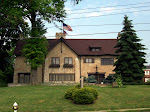
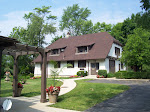
34west worked closely with the Curator of Education for the museum, Rebecca Whittenberger, in securing the location. Built in 1905 in the “Arts and Crafts” style, the home reflects many similarities to the fictional mansion in the story. “Olive Arms was one of the direct descendents of the founding families of Youngstown and was known to entertain from time to time,” says Whittenberger. “Unfortunately, there is no ‘real’ mystery surrounding Mrs. Arms.”
The web series, which is basically a television series made for the internet, will feature short scenes from 34west’s upcoming October mystery dinner theater at Das Dutch Village Inn, Columbiana. “Our live mystery series have always been popular with audiences,” says Querin. “They’re zany, interactive, and surprising. Streaming these online is a perfect fit.”

Featured in the cast are 34west company members Jeff Querin, Stephen Wayne, Maria Householder and Magdalyn Donnelly. Each actor plays multiple parts, which adds to the silliness of the “webisodes.” Querin adds, “It’s very similar to what you’d see on Mad TV or Saturday Night Live, where the same actor plays many roles.”
A new episode of “Clues: The Butler’s Belfry” will air at www.34west.org/films each week in October leading up to the live dinner theater performances in Columbiana, October 27, 28, 29, with a special matinee on October 27.
The live performances will take place in the elegant banquet center of Das Dutch Village Inn of Columbiana, 150 E. state Route 14. Seating for evening shows begins at 6:45 p.m, with a four-course meal beginning at 7 p.m. Seating for matinees begins at 11:45 p.m, with a four course meal at 12:00. Tickets are $40 ($35 matinee); discount given for groups of 8 or more. For
reservations and lodging information call 1-866-482-5050.
To visit the “real” Body Manor in person, The Arms Family Museum is open for tours Tuesday-Sunday. The Mahoning Valley Historical Society is opening a new building in September of 2012: the Tyler Mahoning Valley History Center. To learn more, become a fan on Facebook or visit www.mahoninghistory.org
Wednesday, May 25, 2011
Under Construction!
Construction on The Mahoning Valley History Center is underway! The following is a slideshow showing some of the work that is currently being done on the exterior stair and elevator towers, the front facade restoration and some interior projects.
Sunday, April 10, 2011
David Tod: Ohio's Civil War Governor

An excerpt taken from
Mahoning Memories
A History of Youngstown and Mahoning County
by Frederick J. Blue, William D. Jenkins, H. William Lawson, & Joan M. Reedy
In the mid to late 1800's David Tod was one of the most successful of a growing group of Youngstowners who combined business interests, such as the canal and railroad, with politics. He was the son of a prominent attorney, George Tod of Connecticut, who had come to Youngstown in 1800 with his wife Sarah and two children. David was born in 1805, was raised at the family's expansive farm at Brier Hill, and attended neighborhood schools and the Burton Academy in Geauga County before studying law and being admitted to the Ohio bar in 1827. He was married in 1832 to Maria Smith of Warren. They had three daughters and four sons. When Tod inherited his father's estate in 1841, he continued his business and political activities and opened one of the first coal mines in the Valley. In addition to shipping his coal west and then north to Lake Erie via the Pennsylvania and Ohio canal, he helped to pioneer the use of the high-quality "Brier Hill" coal as a fuel in local blast furnaces in the reduction of iron ore. His economic pursuits led from the canal to railroads. In combination with promoters from Youngstown, Warren and other areas he helped form the Cleveland and Mahoning Railroad and served as its president from 1858 until his death in 1868. He established the Brier Hill Iron and Coal Company, having bought the iron works of the Akron Manufacturing Company and moving it to his Youngstown properties. He thus helped to strengthen the Valley's iron industry.
Despite his prominence in the economic development of the Mahoning Valley, Tod was even better known throughout the state and nation as a Democratic politician. After running unsuccessfully for governor in 1844 and 1846, losing in both instances to Whig candidates by narrow margins, he was appointed by President James K. Polk as minister to Brazil, a post he held for five years. Between 1851 and 1861, he concentrated on his coal, iron and railroad interests in the Mahoning Valley before returning to politics.
The Civil War brought Tod his greatest political prominence. A strong supporter of Democratic presidential candidate Stephen A. Douglas in 1860, he played a central role in the party convention in Baltimore, which chose the Illinoisan to oppose Abraham Lincoln. Following Douglas's defeat, the Union party combined Lincoln's Republicans with War Democrats like Tod who supported the military effort against the Confederacy. Having helped organize a Youngstown company of troops as a part of the Seventh Ohio Voluntary Infantry, Tod was a logical candidate for governor on the Union ticket in 1861. He won a substantial victory, and as Youngstown's only governor in almost two hundred years of Ohio history, he was forced to deal with virtually insolvable problems.
During Tod's tenure, the war came briefly into Ohio with the raid of Confederate leader Colonel John H. Morgan across the southern counties and as close to the Mahoning Valley as Salineville in Columbiana County. Tod was successful not only in his preparations for the military defense of Ohio but also in providing for the welfare of Ohio soldiers and in dealing with the politics of civilian critics and the incessant demands for military promotions. Nonetheless, he antagonized enough of his fellow Union party colleagues to deny him renomination in 1863. In mid 1864 he rejected Lincoln's offer to appoint him secretary of the treasury, preferring to spend his declining years managing his many economic ventures.
Thursday, March 24, 2011
The Arms Family Museum - Celebrating 50 Years!

The Mahoning Valley Historical Society began a rise in the 1950s with an increase in budgets, collections, and property that brought about its present form. At the Annual Meeting in 1955, James L. Wick, Jr. was elected both president and treasurer of the historical society. Mr. Wick considered it a priority to obtain a permanent home for the Mahoning Valley Historical Society and its manuscript and artifact collections.
Encouraged by Grace Heath Butler, Second Vice-President, Mr. Wick talked to his distant cousin, Olive Freeman Arms Arms, about her intention to leave her home to the Mahoning Valley Historical Society. Mrs. Arms was aware of the suitability of her home to serve as a museum, and wished to entrust the preservation of both the house and her personal collection to a trustworthy institution.
 Mrs. Arms left the property at 648 Wick Avenue to the MVHS in memory of her father, Charles Dayton Arms, a founding member of the historical society, and her mother, Hannah Wick Arms. In addition to the gift of the property, its buildings, and contents, Olive Arms added to her bequest an endowment fund for “support, upkeep, maintenance, and operation.” She died in August of 1960. MVHS assumed ownership of Greystone and its contents in March of 1961.
 From the 85th Annual Meeting of the Mahoning Valley Historical Society September 12, 1960. After the meeting was called to order by President James L. Wick, Jr., he paid tribute to Mrs. Wilford P. Arms, an honorary President who passed away at 4:00 p.m. on August 25. Resolved Further, that the members of The Mahoning Valley Historical Society, individually and collectively, take this opportunity to record upon the minutes of this Society their sincere appreciation of the vision and action of Mrs. Arms in making possible the establishment and maintenance of a home for the Society wherein it can preserve its priceless collection of historical documents and other articles of educational interest relating to the history and settlement of the Mahoning Valley and thereby add to the growing cultural developments within this community. Mr. James Henderson asked for the floor and said: “Judge Ford, will you please take the chair and entertain a word which, I am sure, we all feel it would be unthinkable to leave unspoken before this meeting adjourns. We witness here today the happy culmination of all our hopes and dreams for our beloved Historical Society. Only the man himself will question the assertion that just one person, from beginning throughout, and in almost every detail, is in 99% measure responsible for this very real accomplishment. Therefore, I propose we rise to our feet and, with our hearty and affectionate plaudits, express to our own Mr. James L. Wick, Jr., however inadequately, our heartfelt gratitude and admiration.” Everyone present rose to their feet and gave Mr. Wick a rousing ovation.
From Executive Director Bill Lawson:
The 50th anniversary of the acquisition of Greystone, Olive and Wilford Arms’ magnificent Wick Avenue residence, is a milestone in the history of the Mahoning Valley Historical Society. This event was a quantum leap for the organization because it propelled us to a new and greater level of operation that could only be hoped for previously. There have been several other quantum leaps for MVHS since then, including opening of the Archival Library, acquisition of the Business and Media Archives collection, being named a perpetual beneficiary of the Anne Kilcawley Christman Foundation and, most recently, undertaking the Campaign for the Mahoning Valley History Center. But establishing the Arms Family Museum really defined the Historical Society as an organization for the first time, and gave MVHS members, board members and staff the opportunity to foster excellence through good policies and great programs over the next three generations. This high level of function has been recognized by our professional peers through accreditation by the American Association of Museums since 1977. And thousands of individuals and families benefit from participating in our museum-based programs every year. So, Happy Anniversary, Arms Family Museum! And thank you, Olive F. A. Arms, for your great gift to our community.
Wednesday, November 17, 2010
What Happened to Youngstown Township?
The Mahoning Valley is part of a tract of land that once belonged to the state of Connecticut. Connecticut’s Western Reserve was bordered north and south by Lake Erie and the forty-first parallel, and extended 120 miles westward from Pennsylvania. In 1795, Connecticut sold a portion of the Reserve to a group of speculators known as the Connecticut Land Company.
The company surveyed the land, marking several townships of twenty-five square miles to sell to individuals who would in turn subdivide the townships into smaller parcels for sale.
 In 1796, John Young of Whitestown, New York, set out to view the land for himself before making a purchase. In February of 1797, Young visited Connecticut and purchased from the Connecticut Land Company Township Two in the Second Range of the Western Reserve. The sale was finalized on April 9, 1800.The first Court of Common Pleas and General Quarter Sessions was held at Warren on August 25, 1800. During that session, the Court divided Trumbull County into civil townships. The governmental township of Youngstown (not the same as the 5 miles squared township) comprised most of what is now Mahoning County and included the townships of Poland, Coitsville, Hubbard, Liberty, Youngstown, Boardman, Canfield, Austintown, Jackson and Ellsworth.
 MVHS is fortunate to have an original record book for Youngstown Township covering 1802-1829. The ledger contains township minutes, road work, records of Overseers of the Poor, lists of township officers, apprenticeships, and other township business. There is a section in the back which records earmarks and brands registered for residents of the township, used as a means to identify livestock. The ledger was given to MVHS by Senator Benjamin Franklin Wirt in 1911. There is a transcript available for the first section of the ledger.
The company surveyed the land, marking several townships of twenty-five square miles to sell to individuals who would in turn subdivide the townships into smaller parcels for sale.
 In 1796, John Young of Whitestown, New York, set out to view the land for himself before making a purchase. In February of 1797, Young visited Connecticut and purchased from the Connecticut Land Company Township Two in the Second Range of the Western Reserve. The sale was finalized on April 9, 1800.The first Court of Common Pleas and General Quarter Sessions was held at Warren on August 25, 1800. During that session, the Court divided Trumbull County into civil townships. The governmental township of Youngstown (not the same as the 5 miles squared township) comprised most of what is now Mahoning County and included the townships of Poland, Coitsville, Hubbard, Liberty, Youngstown, Boardman, Canfield, Austintown, Jackson and Ellsworth.
Youngstown Township ceased to exist on November 17, 1913 when its remaining area was annexed by the City of Youngstown. Parts of Boardman, Liberty and Coitsville Townships were also affected in 1929-1930 when the City of Youngstown added to its incorporated area through additional annexations.
 MVHS is fortunate to have an original record book for Youngstown Township covering 1802-1829. The ledger contains township minutes, road work, records of Overseers of the Poor, lists of township officers, apprenticeships, and other township business. There is a section in the back which records earmarks and brands registered for residents of the township, used as a means to identify livestock. The ledger was given to MVHS by Senator Benjamin Franklin Wirt in 1911. There is a transcript available for the first section of the ledger.
Thursday, September 16, 2010
The Campaign for the Mahoning Valley History Center
 The Mahoning Valley Historical Society is pleased to announce the completion of the plans for the restoration and renovation of the historic Harry Burt/Ross Radio building to create the new Mahoning Valley History Center in downtown Youngstown. To date, the Historical Society’s Campaign for the Mahoning Valley History Center has raised $4,346,190, which is 72% of the campaign goal of $6 million.
Founding donors include the Frank and Pearl Gelbman Foundation, Mr. and Mrs. Paul J. Thomas, and Jeanne D. Tyler. Other lead gifts include contributions from the John S. and Doris M. Andrews Memorial Fund, the Ward Beecher Foundation, the John and Loretta Hynes Foundation, the City of Youngstown, Roberta Marsteller Hannay, the Pollock Personal and Company Foundations, and Mary Alice B. Schaff.
 The Campaign is introducing its public phase to incorporate broad-based community support. In celebration of local entrepreneurship and the creation of the Good Humor® brand, the Historical Society is launching the Harry Burt Donor Bar campaign. The public is invited to purchase a metal plaque imprinted with an ice cream bar—inspired by Harry Burt’s invention of the Good Humor® ice cream bar on a stick—to be produced by Wendell August Forge in Grove City, Pennsylvania. The plaques will include an engraving of the donor’s choosing, and be permanently displayed in the History Center.

“The partnership between the Historical Society and Wendell August Forge is perfect," says Campaign Director Carol Potter, "these two historic entities both have a tradition in hand-crafted materials. These tiles will be a great addition to the architecture of the historic History Center building.”
Donor Bars will be available in three giving levels: $125 for aluminum, $250 for bronze, and $500 for copper. For more information, please contact the Historical Society at 330-743-2589.
Renovation work will begin at the end of September. The new History Center is expected to be completed in the first half of 2012.
The Historical Society also is unveiling a new logo showing the two historic sites now under their operation. The Arms Family Museum will continue to operate as a historic home and museum, with a new focus on decorative arts and the Arts & Crafts design movement. The new History Center will feature exhibits on the history and heritage of the Mahoning Valley as well as provide new educational and meeting space.
"The History Center will be much more than a museum," says Executive Director Bill Lawson, "this will be a community center based the region's history that can be used to celebrate the life events that create a family's history. We hope that the wonderful ballroom and exhibit spaces become the backdrop for weddings, graduations, reunions, and dances. We want the community to feel at home in our building, and see their story told."
Tuesday, June 22, 2010
2010 Historic Preservation Award Winners
 Community Revitilization Award
John Stark Edwards House & Museum – Interior & Exterior Restoration
The John Stark Edwards House was built in 1807, and enlarged in 1809 by one of the first pioneers to arrive from Connecticut. This home was occupied by three families: The John Stark Edwards Family; the Thomas Denny Webb Family; and the Iddings Family. It was a residence until 1938 when the last survivor turned the house over to the state. Martin Davey, Governor of Ohio at the time, gifted the structure to the Trumbull County Historical Society. The house was moved twice and now sits in Warren’s historic district. In 2006 The Historical Society received grant money through the Ohio Cultural Facilities Commission and began a restoration of the interior including ceilings, walls, floors and windows; as well as exterior renovations including a new roof, spouting, repair and repainting of the original cedar siding, new shutters with the original metal hardware, reinforcing of stone walls and accessibility improvements. Project designers include: Harry Kapouralos, project manager; William Sauer, architect; Don Hazel, Trumbull County Historical Society President; Gina Bodor, grant coordinator; and Martha Ellers, advisor.
 Community Revitalization Award
National McKinley Birthplace Memorial – Exterior Restoration
The National McKinley Birthplace Memorial, in Niles Ohio, is a tribute to the birth place of our 25th President. Designed by the New York Architectural firm of McKim Mead & White, the memorial was completed in 1915. The facility consists of a central courtyard to house the John Massey-Thind sculpture of President McKinley a public library, and a museum with an auditorium. Restoration included cleaning and repair of terra cotta fascia and soffit within the courtyard, repairing and restoring marble pavers, repair of the original clay tile roof and copper flashing, re-glazing of original windows and replacing three large skylights that had been roofed over for the past 20 years. Owner of this property is the National McKinley Birthplace Memorial Association Board of Trustees and Project designer was Balog Steines Hendricks & Manchester Architects.
 Commercial Revitalization Award
Realty Tower Apartments – Exterior & Lobby Restoration
Designed by noted Youngstown architect Morris Scheibel, this 13-story building was built by the Realty Guarantee & Trust Company for their offices in 1924. The building has been listed on the National Register of Historic Places since 1980. The Frangos Group purchased the building in December 2000, and later hired City Architecture, Inc. of Cleveland, Ohio to design an adaptive reuse project to convert the building from offices to apartments. Construction formally began in 2008. Along with renovation of the interior spaces, the project included restoration of the original cornice and other historic exterior finishes, and restoration of plaster, metal, stone and tile surfaces in the historic lobby.
MVHS Directors Award of Achievement
C. Gilbert James, Jr.
 Mr. James has been a strong advocate for local history and historic preservation for five decades including: establishing the Western Reserve Village on the Mahoning County Fairgrounds in Canfield; spearheading the campaign to raise funds to preserve and restore the Mahoning Valley Historical Society’s Carriage House, and adaptively reuse it as the MVHS Archival Library and meeting center; and being an active participant with several historical agencies including MVHS, the Canfield Historical Society, the William Holmes McGuffy Historical Society, the Western Reserve Village Foundation, the International Institute of Youngstown, the former Medical Museum at St. Elizabeth Hospital and the Melnick Medical Museum at Youngstown State University.
MVHS Directors Award of Achievement
Patricia Sweet
 A tireless advocate for preservation, Mrs. Sweet led the efforts of the Historic Preservation Committee, Board of Directors and staff to create the annual Mahoning Valley Historical Society Historic Preservation Awards program in 2005. She also was instrumental in securing financial support from the Raymond John Wean Foundation to underwrite this program over all of the past six years. The Historic Preservation Awards program has been a highly successful, visible and positive community outreach for the Historical Society in its goal to advocate for more diverse and effective historic preservation efforts in the region.
MVHS Directors Award of Achievement
Leland Van Camp
 Mr. Van Camp has been a cornerstone in the small community of Beloit for many years. In 2004, he provided the impetus to organize the Beloit Area Historical Society; the vision for acquiring and preserving an old tin shop as the home for the organization; and continues to advocate for the collection of artifacts related to Smith Township. Mr. Van Camp operates a gas station, with its restored vintage gas pump, antique candy counter and shelves filled with gas and oil memorabilia, it also can be considered a historic treasure, and spends many hours volunteering for community causes. Nominator David Mannion had this to say about Mr. Van Camp: “His tireless dedication to this community has truly been a blessing, and his keen interest in preserving the history of the Beloit area is very inspiring to the next generation of citizens considering historical preservation efforts and community service.”
See more images of the winning projects!
Wednesday, March 17, 2010
Daniel Sheehy

From History of Youngstown and the Mahoning Valley Vol. 1
By Joseph Green Butler
By Joseph Green Butler
Daniel Sheehy was born in Tipperary County, Ireland, in 1759. He was given a classical education, having been destined for the law or the priesthood, but early in life left his native land to carve out a fortune in the New World. His decision was hastened by the fact that he was an outspoken enemy of the British government, and, impulsive in temperament, plunged wholeheartedly into the movement for Irish freedom. With two of his near relatives executed for opposing British domination and his own life certain to be forfeited if he remained in Ireland, Sheehy came to America and enlisted in the Revolutionary Army.
Image from Irish in Youngstown and the Greater Mahoning Valley of Jane McLean Sheehy, son Daniel Jr., and wife Charlotte Pearson Sheehy.
Serving until the end of the Revolution, Sheehy located in Connecticut or New York State and met John Young at Albany, New York, in 1796. Sheehy had $2,000 in gold which he wished to invest in land and he accepted John Young's proposal to emigrate to the Western Reserve. He contracted with Young for 1,000 acres of land, a contract that later caused difficulty between Sheehy and Young. Not having a title himself until 1800, Young could not give title at that time to sub-purchasers and Sheehy alleged that in 1799 Young made a second sale of part of Sheehy's land at an advance of 50 cents an acre. To prove his rights Sheehy was forced to make two trips to Connecticut, both of these being made afoot through the wilderness in the dead of winter. An adjustment was finally reached by which Sheehy retained title to 400 acres of land but relinquished his claim to another 600 acres.
For threatening Young's life during this controversy Sheehy was arrested and fined $25, but that their differences were later settled amicably is apparent from the fact that. Sheehy's second son was named after the founder of 'the city. According to one account this was a feminine wile adopted by Sheehy's wife, and really brought about the adjustment of the dispute instead of following it. This pioneer woman was born at Ligonier, Westmoreland County, Pennsylvania, in 1775, a daughter of Robert McLain, an early settler of Central Pennsylvania. Having accompanied Hillman, Young and the others to Beavertown to celebrate the Fourth of July, 1797, Sheehy there met Jane McLain and later he journeyed to Beavertown on horseback for the wedding ceremony. Sheehy died at Youngstown on January 20, 1834, and his widow in 1856, leaving numerous descendants here.
Tuesday, March 16, 2010
The Puddler Poet
 Michael McGovern, the “Puddler Poet” was born in Castlerea, Roscommon, Ireland, in 1847 or 1848 at the height of the Famine crisis. Like many refugees, McGovern first immigrated to London, and there he met and married Anne Murphy in 1872. They eventually came to the United States, circa 1881-1882 first to Pennsylvania and then to Youngstown, Ohio where McGovern found work as a puddler in the rolling mills. Puddlers were highly skilled iron workers who labored in heat and smoke and stirred molten iron which was then shaped and rolled into ingots. While McGovern stirred the iron, he also stirred his thoughts and impression, gathering the words to be molded into the poetry for which he is best remembered. As the McGovern family settled into permanent life in the Mahoning Valley, his poems became numerous. McGovern wrote about the mills, the laborers, Ireland, love and the injustices imposed upon the working class. His writings appeared in many newspapers and Irish-American periodicals. His book of poetry, Labor Lyrics, appeared in 1899 and received acclaim through the United States.
 Labor’s Cause
We meet today to sympathize
With Homestead men who seek redress;
To soothe with hope the widow’s cries
And aid them in their sore distress;
To join in saying, that as sure
As reigns a supreme judge on high,
Who sees what men who toil endure,
The cause of labor shall not die.
It was not Washington’s intent,
Whose patriot soldiers overthrew
Oppression that these states were meant
As Eldorados for the few.
Their fight is ours again today,
Their wrongs and ours the same imply,
And in those patriots’ names we say
The cause of labor shall not die.
Send forth the words on spirit wings
That wealth no longer shall maintain
In this free land its petty kings,
With armed thugs to guard their reign.
With justice in this noble fight
Wealth’s private armies we defy;
With votes as weapons wielded right,
The cause of labor shall not die.
That wealth no longer shall maintain
In this free land its petty kings,
With armed thugs to guard their reign.
With justice in this noble fight
Wealth’s private armies we defy;
With votes as weapons wielded right,
The cause of labor shall not die.
Wednesday, March 10, 2010
Marie Marsh - Women's Airforce Service Pilots
Members of the WASP (Women's Airforce Service Pilot) are receiving Congressional Gold Medials in Washington D. C. today in honor of their service duirng World War II.
One of those "fly girls" was from Youngstown.
 Marie Barrett Marsh
The following is excerpted from Marie Barrett Marsh, A Biography by her husband John E. Marsh.
Marie Barrett Marsh was born December 3, 1919, a daughter of Marie Lawlor and John P. Barrett. When her parents split in 1931, Marie spent a year living with an aunt in Chicago which greatly influenced her young life offering her many cultural and social opportunities. She returned to live with her mother and attended the Rayen School and Youngstown College. While at Rayen she received a $25 award for writing the best senior essay on the history of Ohio.
During the summer of 1940, Youngstown College, in cooperation with Bernard Airport, offered Civilian Pilot Training in which Marie enrolled – one of two girls in the class of 29 students. The course was funded by the U.S. Government and consisted of ground school courses necessary to pass the written exam, plus 35 hours of flying time to pass the flight test in order to obtain a Private Pilot’s License. Following this course, she took Secondary CPT, which included aerobatic instruction in an open cockpit biplane.
After graduating from college in 1941, Marie had a teaching contract in Mecca, Ohio. She taught math, general science, shorthand and typing. After completing a year of teaching at Mecca, she was hired by Dr. George Bowman, Superintendent of Schools in Youngstown, on a teaching contract. She worked in the Superintendent’s office until May of 1943 when she entered flight training at Avenger Field in Sweetwater, Texas.
The WASP Program
Marie graduated in November, 1943, class 43-W-7 as a W.A.S.P. (Women Air force Service Pilot). The WASP women pilots each already had a pilot's license. They were trained to fly "the Army way" by the U.S. Army Air Forces at Avenger Field Airport Sweetwater, Texas. More than 25,000 women applied for WASP service, and less than 1,900 were accepted. After completing four months of military flight training, 1,078 of them earned their wings and became the first women to fly American military aircraft. Except for the fact that the women were not training for combat, their course of instruction was essentially the same as that for aviation cadets.
After training, the WASPs were stationed at 120 air bases across the U.S. assuming numerous flight-related missions, relieving male pilots for combat duty. They flew sixty million miles of operational flights from aircraft factories to ports of embarkation and military training bases, towing targets for live anti-aircraft artillery practice and simulated strafing missions, and transporting cargo. Almost every type of aircraft flown by the USAAF during World War II was also flown at some point by women in these roles. In addition, a few exceptionally qualified women were allowed to test rocket-propelled planes, to pilot jet-propelled planes, and to work with radar-controlled targets. Between September 1942 and December 1944, the WASP delivered 12,650 aircraft of 78 different types. Over fifty percent of the ferrying of combat aircraft within the United States during the war was carried out by WASP pilots.
Marie was assigned to the headquarters of the Weather Wing of the Army Air Force in Asheville, North Carolina. Their duties included being pilots for the non-flying top brass in the Weather Wing, with flights to Army weather stations all over the U.S., courier service to the Pentagon, “mercy flights,” and flight testing the aircraft at the base after repair.
In 1944 Marie resigned from the WASP, as the need for pilots had drastically decreased. She married her high school sweetheart, John Marsh on June 27, 1944 and raised eight children in Vienna. Marie kept her pilot’s license current, and several of her children became involved with aviation. Marie was diagnosed with inoperable lung cancer in 1996 and died in April of 1997.
In 1999, Marie was inducted into the Ohio Women’s Hall of Fame
The WASP Legacy
All records of the WASP were classified and sealed for 35 years, so their contributions to the war effort were little known and inaccessible to historians. In 1975, under the leadership of Col. Bruce Arnold, son of General Hap Arnold, the WASPs fought the "Battle of Congress" in Washington, D.C., to belatedly obtain recognition as veterans of World War II. They organized as a group again and tried to gain public support for their official recognition. Finally, in 1977, the records were unsealed after an Air Force press release erroneously stated the Air Force was training the first women to fly military aircraft for the U.S.
This time, the WASPs lobbied Congress with the important support of Senator Barry Goldwater, who himself had been a World War II ferry pilot in the 27th Ferry Squadron. President Jimmy Carter signed legislation #95-202, Section 401, The G.I. Bill Improvement Act of 1977, granting the WASP corps full military status for their service. In 1984, each WASP was awarded the World War II Victory Medal. Those who served for more than one year were also awarded American Theater RibbonAmerican Campaign Medal for their service during the war.
On July 1, 2009 President of the United Barack Obama and the United States Congressawarded the WASP the Congressional Gold Medal. Three of the roughly 300 surviving WASPs were on hand to witness the event. During the ceremony President Obama said, "The Women Airforce Service Pilots courageously answered their country's call in a time of need while blazing a trail for the brave women who have given and continue to give so much in service to this nation since. Every American should be grateful for their service, and I am honored to sign this bill to finally give them some of the hard-earned recognition they deserve.”
Today, March 10, 2010, 200 surviving WASPs arrived at the US Capitol to accept the Congressional Gold Medal from House Speaker Nancy Pelosi and other Congressional leaders.
Internship Opportunity
The Mahoning Valley Historical Society (MVHS) in Youngstown, Ohio, seeks an intern for Summer Semester 2010 to work with its collection of historical materials at the Arms Family Museum of Local History, located at 648 Wick Avenue near the campus of Youngstown State University. The intern will assist with packing and moving collections objects and rearranging existing storage spaces to accommodate the collections being moved. This will involve lifting, carrying, and moving all sorts of museum objects including portraiture, furniture, costumes and other items housed in archival storage boxes, and more. Some museum objects will be moved off-site to a satellite storage space not far from the museum. Other curatorial duties may be assigned during the course of the internship.
The successful candidate should be willing to learn current standards in curatorial practices. Must possess excellent organizational and communication skills, be willing to work in a cooperative, team-based environment, and be able to lift 30 lbs.
Qualifications: Upperclassman undergraduate or graduate level student in museum studies, public history, history, or related field.
Stipend and Hours: A stipend totaling $1,400.00 will be paid in three (3) installments during the term. The internship totals 150 hours, or approximately 10 hours per week over the course of the summer. Intern hours should be completed during regular MVHS office hours (Monday – Friday, 9:00 a.m. – 5:00 p.m.). Other scheduling arrangements may be made at the discretion of MVHS staff.
Date Available: Monday, May 17, 2010
Application Closing Date: Open until the position is filled.
Contact: Mail resume to:
Summer 2010 Curatorial Internship
c/o Jessica D. Trickett
The Mahoning Valley Historical Society
648 Wick Avenue
Youngstown, OH 44502-1289
Or email with “Summer 2010 Curatorial Internship” as subject to: curator@mahoninghistory.org.
Or call: 330.743.2589
Friday, February 19, 2010
Rayen High School Time Capsule
 In late August, the Youngstown Board of Education approved a resolution allowing the School District to donate the Rayen High School time capsule from 1921 to the Historical Society. This time capsule was placed in the cornerstone of the new building at Benita Avenue when it was dedicated on June 7, 1921, and it was recovered when the building was recently demolished.
 The capsule consisted of a sealed copper container roughly the size and shape of a shoe box, which was manufactured by the John R. Squire Company, 355 East Wood Street, in downtown. In it was a 1920 silver quarter dollar and numerous paper documents from 1921 including a list of school board members, lists of faculty and administration for Rayen High School, lists of the members of each graduating class from 1914 to 1921, copies of the student magazine The Rayen Record, and recent editions of the Youngstown Vindicator and the Youngstown Telegram—the two daily newspapers at the time.
Another interesting piece in the time capsule is Charles F. Owsley’s business card. Mr. Owsley was the architect for the new Rayen School, and he wrote on this particular card that he was an 1899 Rayen School graduate.

Most of these materials, along with the time capsule container, are now on exhibit in the new aquisitions area of the Arms Family Museum.
 The Vindicator published a nice story on the time capsule and it's significance.
Read it here.
Youngstown’s First High School
When William Rayen died in 1854, his will set aside $31,390 for a public academy to be known as “The Rayen School.” P. Ross Berry, an African American brick and stone mason, built the four-room brick building at the corner of Wick and Wood in the Greek Revival style of architecture. It opened its doors in 1866 with forty students and a predominantly female faculty. It graduated Youngstown’s first high school students several years later. The Rayen School was the city’s only high school until 1911.
Tuesday, February 2, 2010
African-American Women in the Civil War

African American Women
During the Civil War
A free program from the Ohio Humanities Council Speakers Bureau.
They were young and old, sisters, mothers, and grandmothers. Some were well-to-do, others were slaves. All resolved to be a part of the War that would ultimately determine the status of the Black man in America. This talk focuses on women of African descent—Susie King Taylor who nursed with Clara Barton; Elizabeth Keckley, dressmaker and confidant to Mary Todd Lincoln; Charlotte Forten, college graduate and first African American to teach freed slaves in the south, Harriet Tubman, Sojourner Truth, and others—and their unique contributions to the war effort. Dr. Jefferson discusses how such women, without access to political power and often lacking material and/or financial resources, acted with strength of character and will to make meaningful contributions to the war that impacted the world and changed a nation.
Thursday, March 4th
7:00 to 8:30 p.m.
Youngstown Historical Center (Steel Museum)
151 W. Wood Street, Youngstown
 Annette Jefferson holds an MA in Black Studies and a Ph.D. in Social Work, and works as a development officer in Human Services. She has spent more than 20 years developing her presentation and performing as Sojourner Truth across the state, including as part of Ohio Chautauqua 2001. She hopes that people are uplifted by Sojourner’s story and will use that inspiration to bring about positive changes in their own lives.
This program is sposored by the Mahoning Valley Historical Society, YSU Center for Applied History and YSU Women's Studies. Funding for the program was made possible by the Ohio Humanities Council, a state affiliate of the National Endowment for the Humanities.
Thursday, October 15, 2009
Youngstown Art History
Happy 90th Anniversary to our neighbors at the Butler Institute of American Art! Excerpt from History of Youngstown and the Mahoning Valley, Ohio, Volume 1 By Joseph Green Butler
Butler Art Institute
 This institution, the gift of J. G. Butler, Jr., to the City of Youngstown, is not only a realization of the ambition of its founder but fulfills the fond hope of the many residents of this community who are lovers of art. In the words of one of its admirers this art institute has an ennobling influence "not only because it provides a profitable recreational interest for leisure hours but because the contemplation of beautiful works of art exalts the spirit and awakens in the beholder a civic pride —a desire to have the city a fitting environment for its people."
 Mr. Butler has been a collector of fine paintings for many years, and even before the establishment of the present institution made every effort to permit the people of Youngstown to share in the enjoyment of these works of art. When the Mahoning Institute of Art was incorporated on February 27, 1915, he was elected its president, this organization being the outgrowth of a movement started by the Ohio Federation of Women's Clubs. Under the patronage of the Mahoning Institute of Art many exhibits of paintings were brought to Youngstown and these aroused great interest, although the exhibits were made with difficulty, as Youngstown had no appropriate place in which they could be held.
In the erection of the Butler Art Institute this handicap has been overcome. The institute now has a permanent collection of seventy-five paintings of high artistic quality, suitably housed on the first floor of the art buildings, and to this collection will be added more paintings from time to time. This is only part of the opportunity afforded by the institution, however. It is the policy of the institute to invite outside exhibits in order to give the people opportunity to become acquainted with the works of great artists who are not yet included in the permanent collection. To give art a vital interest in the life of the community, lectures are also arranged and given to the public free of charge.
The educational department has now four well-organized classes— the local artists, who are allied under the name of the Mahoning Society of Painters, the Youngstown Art League, under the direction of Ceylon Hollingsworth, a picture study class for young children, and a class in drawing and painting for the upper grade students with special talent.
The first exhibit of paintings done by local artists was held in the winter of 1919-20, with results that were gratifyingly surprising to promoters, exhibitors and the public alike. The attendance was far beyond expectations, and those who attended were in turn astonished to find that Youngstown had so many talented artists. It was this showing that inspired the organization of the Mahoning Society of Painters, a body of men and women who have banded together to exchange ideas and to develop the talent given them. It is more than likely that, as a result of this movement, an exhibit by local artists will be an annual feature of the Art Institute.
The Institute is given over wholly to American art. It is unique in the United States in this respect, and it is certain that this will have a great influence in encouraging American artists and in leading them to greater efforts.
The Butler Art Institute itself is an unusually beautiful building of Georgia marble. The main facade is 120 feet long and 34 feet 11 inches in height. The central feature is a portico of three arches, and on either side are niches containing statues of Apollo and Minerva, the work of the great American sculptor, J. Massey Rhind. The portico gives access to the central hall, designed to receive sculpture and objects of art other than paintings.
The doorway opposite the entrance gives access to the staircase lending to the second floor, and also leads out of the gallery to the open court that will lie between the two proposed projecting wings of the building. It is proposed to arrange this court as a formal Italian garden, with fountains and with a loggia at the extreme end corresponding to the entrance portico. The doorways to the right and left of the central hall lead to the two principal galleries for paintings. The wings to be added will be entered through these rooms, the entrance being indicated now by doorway outlines that are temporarily housing paintings. The general style of the building throughout is of the Early Italian Renaissance. The park-like Institute grounds will extend from Wick Avenue through to Bryson Street, all the property for this purpose having been purchased by Mr. Butler. The structure was designed by McKim, Meade & White.
The building was formally opened on October 15, 1919, and on October 16, 1919, was opened to the public. The patronage since the opening day has been surprisingly large. It has not only been a gathering place for Youngstown lovers of the beautiful, but the Institute register daily records the names of art lovers from all sections of the country from the Atlantic Coast to California.
The Institute represents thus far an investment of approximately $500,000 in lands, building and paintings given by Mr. Butler from the private collection that he has been years in accumulating. In addition the founder has provided an endowment fund of $200,000 to insure the permanency of this great work. To enable this to be carried on the Butler Art Institute was regularly incorporated on December 27, 1919, by J. G. Butler, Jr., John Stambaugh, John W. Ford, Jonathan Warner and Henry A. Butler.
Wednesday, September 16, 2009
The Mahoning Valley Collects
Take a sneak peek inside the newest exhibit at the Arms Family Museum.
Included in the exhibit are collections of cameras, postcards, Native American implements, political memorabilia, guns and dolls.
The exhibit is open Tuesday-Sunday from 1:00 to 5:00 p.m. and will be on display through September 2010.
Included in the exhibit are collections of cameras, postcards, Native American implements, political memorabilia, guns and dolls.
The exhibit is open Tuesday-Sunday from 1:00 to 5:00 p.m. and will be on display through September 2010.
Tuesday, September 1, 2009
Uncovering the History of Wick Avenue
Though it’s no longer recognizable as the house shown in the 19th century photograph below, this structure is still very much part of the historic and cultural fabric of Youngstown’s Wick District. It was built by the widow of a local business leader who died of disease while serving in the Union Army during the Civil War. It was then occupied between 1866 and 1959 by three generations of the same family.
 Emeline Warner Arms was a 35-year-old widow with six children when she began construction of her new home in 1865. Her husband, Myron Israel Arms (uncle of the Historical Society’s benefactor, Olive F. A. Arms), died on September 10, 1864, after contracting Typhoid Fever in his regiment’s camp in Virginia. The family moved into the house the following year, and there Mrs. Arms spent the rest of her days. Her youngest daughter and son-in-law, Harriet A. and Charles H. Booth, remained in the house after Mrs. Arms’ death, and completely remodeled it early in the 20th century, transforming its exterior design from Italianate to an Italian-style villa, as shown below.
 Harriet Arms Booth lived in the house until her death in 1952 at the age of 91. Her daughter and son-in-law, Jane A. B. and Philip H. Schaff, Sr., moved in afterward with their two youngest children. In 1959 the Schaffs sold the house to First Christian Church, located across Spring Street since 1934. The church renamed the building Disciple House, and used it for a variety of functions until 1966, when they sold the property to Youngstown State University. YSU officially changed its name from Disciple House to Alumni House in 1983.
Though the name and function of the property changed over the years, it remains at 606 Wick Avenue as the oldest surviving of the grand houses to be built in this neighborhood in the 19th and early 20th centuries. Join us on Sunday afternoon, September 13, at 1:00 p.m., for free walking tours along Wick Avenue as part of the Founders Day Open House at the Arms Family Museum of Local History. There is diverse historic and modern architecture to see, and many more interesting stories to be told!
Monday, July 27, 2009
Remembering Edna Pincham

Edna D. Pincham, a member of the Mahoning Valley Historical Society’s Board of Directors since 2007 and a passionate community leader, educator and advocate, passed away on June 24, 2009, after a short illness. One of Edna's great passions was local history. She was a key member of the committee which produced the research for an Ohio Historical Marker to honor decorated Civil War veteran Oscar D. Boggess, the first historical marker dedicated to an African American in Mahoning County. The photograph shows Edna on the left at the marker unveiling and dedication in September 2006.
Edna’s published tribute noted that among the proudest events of her life was her inclusion in an exhibit produced by the Mahoning Valley Historical Society in 2001 titled Far From Home: Stories from Immigrant Children to the Mahoning Valley. This exhibit chronicled the migration experience of several young people who left their homes in Europe, the Middle East and the American South to resettle locally in the 20th Century. To honor her memory, following is the text copy that told Edna’s story in the exhibit:
"Edna Pincham grew up in a community full of faith, family and love in southern rural Georgia—the town of Quitman in Brooks County. This rural and religious lifestyle was all Edna knew in her first 18 year of life. Life in Quitman during the 1950s was slower and tight knit, with neighbors around all of the time. There were only three churches in town, and everyone gathered between the three on Sundays. Edna had never left her family before coming to Youngstown. Outside of Florida, she had never been further than Atlanta. She came to Youngstown at the age of 18 in 1954 to attend Youngstown College and live with her sister. Edna’s first experience with racism was when her family took her to a train station for her journey north. There at the station, African Americans were asked to remain in a back room, while white travelers were allowed to sit in a waiting room with plush chairs. The room was small and cramped and they could look through a window at those in the larger room.
Edna took the B&O Railroad from Georgia to Washington DC—a very long trip. She was alone, and had to change trains by herself. Her mom made sure she had enough food until Washington. In a shoe box, she had fried chicken, biscuits, pound cake, and apples and oranges. At that time, African Americans were not allowed in the dining car, so Edna ate the contents inside the shoebox. She even drank the orange juice because she refused to go to the fountain labeled “colored.” On the train from Washington DC, she was able to go to the dining car and water fountain. When she finally arrived in Youngstown, her whole family was waiting to see her, including her sister and brother-in-law. She was excited to see a city with streetcars and was even more thrilled to be picked up in a car. She found a job almost immediately at LaFrance Cleaners and attended school at Youngstown College. Though she continued to face some discrimination at school and in work, she eventually got a job with Dr. W.P. Young who supported her career as a lab technician. Edna went on to have a successful family, co-own a successful moving company, and pursued a career in politics as well. Today Edna is known for her commitment to volunteerism and concern for the welfare of young children in the Mahoning Valley."
Subscribe to:
Posts (Atom)