Monday, July 14, 2008

The Boys & Girls of Summer

The game of baseball has been known as America’s national pastime since the 1870s, but its origins are much earlier. While the sport’s exact beginnings are disputed, an early English folk game called stoolball is likely the forerunner to modern baseball. In stoolball, which may have been played as early as the 11th Century, one player defended a target (the stool) while another player threw a ball trying to hit the target. Eventually, the player guarding the target used a bat to deflect the ball. Later, the batter had to run between two stools in order to defend both from the thrower.

The modern game of baseball did not come to be until the mid-19th Century. The New York Knickerbockers club, founded September 23, 1845, is credited with outlining the rules for playing the game as we now know it. In the following decade, more than a dozen teams, including the Knickerbockers, formed the National Association of Baseball Players, the first organization to govern the sport of baseball and its first professional teams. In 1876, that organization was replaced by the National League of Professional Baseball Clubs. The National League, along with the American League which formed in 1901, constitutes modern Major League Baseball.

While baseball became a popular professional sport, it also thrived in amateur and school leagues across America. Beginning July 12, the Arms Family Museum of Local History will show the photographic exhibit The Boys and Girls of Summer. The exhibit will feature images of local baseball teams from throughout the 20th Century. From the Rayen High School team of 1901 to the General Electric Softball team of 1976, the exhibit will show some of the teams and players that have brought our national pastime to life in the Mahoning Valley.


A New Exhibit at The Arms Family Museum of Local History

Open Tuesday-Sunday from 1:oo to 5:00 p.m.

Images: Rayen High School Baseball Team, 1901; General Electric Softball Team, 1976; Youngstown Sheet & Tube Baseball Game, 1920

Sunday, May 25, 2008

2008 Historic Preservation Awards

The Historic Preservation Committee of the MVHS Board of Trustees is pleased to announce the winners of the 2008 Historic Preservation Awards. These awards honor those in Mahoning and Trumbull Counties who take an active role in preserving historic buildings, sites and districts.

The Categories and winners are as follows:

Community Revitalization Awards


The Suspension Bridge on Valley Drive in Mill Creek Park in Youngstown

Bulit in 1895, Restored in 2007


This projects efforts included repaving the bridges surface, installation of new channel supports and brackets, along with new timber strip decking and timber plank sidewalks.


The suspension bridge project was completed between June and November 2007. The most recent rehabilitation of the bridge was carried out in 1973 and a concrete pier was constructed under the center of the bridge, and new wide flange steel beams were installed to independently support the bridge deck from the original suspension system.


Prior to the revitalization efforts, the bridge was rated "4P" by the Ohio Department of Transportation, which means the bridge was in poor condition. The bridge suffered from advanced section loss on members, deterioration and spalling. Now the 86 ft. suspension bridge known by different names like "The Cinderella Bridge" and "The Fairytale Bridge," looks as good as new. This bridge was placed on the National Register of Historic Places in 1976, and was featured in the internationally distributed American Society of Engineers' year 2000 calender.


Moss Ancestral Home in Mineral Ridge
Built in 1843, Restored in 2003


Current owner of the home, Mary Lou Godleski was in search of the home that her great, great grandfather lived when he immigrated to the United States with his family in 1855 from Luxemberg. What she found was a home in complete disrepair, and after large restoration efforts the home is now considered by Architectural restoration classes at Youngstown State University as historical preservation and also historical architecture.

Mary Lou Godleski first set out to find the home in 1990. Upon finding the home which had been condemned by Wethersfield Township Mary Lou struck a deal to purchase the home from the owner whom was inprisoned at the time, and she convinced the local authorities that it was important to save it from being torn down.


The restoration beagan by first tearing out everything that had been recently added to the house. The process also included replacement of floors, ceilings, and windows. Also, the crane and a bake oven from the original kitchen of the house were rebuilt and repaired. Much of this home was restored back to its original form.


Commercial Revitalization Award


Tod Cemetery Mausoleum in Youngstown

Built in 1927, restored 2007


This outstanding example of an early 20th century cemetery facility underwent a major restoration that included new storm sewers and ground water control, asbestos removal, repairing of roof leaks and replacement of original copper roof, flashings, gutters and downspouts. The investment in original materials shows their commitment to community restoration.

The Tod Mausoleum is located on the grounds of the Tod Homestead Cemetery, a National Registry property. The Mausoleum is faced with white Vermont Marble over solid concrete floors, walls and roof. The interior is faced with marble panels, decorative plaster, orante metal work, and Tiffany stained glass windows. The Trustees of the Tod Homestead Cemetery undertook the major restoration project on the occassion of the Mausoleum's 80th year.

MVHS Directors Awards of Achievement


Wick Pollock Inn Sunken Gardens, Youngstown State University


Built 1930, restored 2007


The revitalization of the 1930 Wick Pollock Inn Sunken Gardens, Youngstown State University; This projects efforts were led by members of Youngstown State Universities Student Government Association. More than 40 volunteers contributed over 400 man hours to the efforts which included clearing seven dump truck loads of debris from the garden as well as mulching and maintaining it after the project was completed.


In the spring semester of 2007, the Youngstown State University Student Government Association was approached by a student who had chanced upon an old and forgotten garden near the carriage house of the Wick-Pollock Inn. Since the Inn was closed, the garden had not been touched. So, with their own funds and hard work, the SGA was able to revitalize the garden to become a coveted source of pride for the university.


Organization began in February of 2007 through the collaboration of SGA, YSU groundskeeper Larry Tooker, and Kridler Gardens of Homeworth, Ohio. Mr. Tooker was previously the horticulturalist for Mill Creek Park, and guided SGA through the process from begininng to end.


The hard work and dedication of the students and community members has revitalized a once forgotten garden that Mary Wick Pollock, and even the children of Smoky Hollow walked and played in. Now, the garden can be enjoyed by the thousands of students at YSU as well as members of the public.


The winners will be honored at the Mahoning Valley Historical Society's 133rd Annual Meeting to be held on Tuesday, June 17th in the Christman Room at Stambaugh Auditorium. For more information about the awards and the historical society call 330-743-2589 or visit www.mahoninghistory.org.


Thursday, May 22, 2008

Summer Camp Program


History on Stage!


The Mahoning Valley Historical Society presents “History on Stage” a summer camp for children ages 7-12, from June 16-19 2008. The program will be held each of these days from 10 a.m. to 12 p.m. at the Arms Family Museum, 648 Wick Avenue in Youngstown.

Participants will create, produce, direct and star in a mini-drama based on the historic diary of a local pioneer woman. Activities will include historic games, crafts and prop-making.

Family and friends will be invited for a performance on the last day of the camp.

The cost of the camp is $18 for MHVS members and $20 for non-members. This includes a camp t-shirt. To register call 330-743-2589.

Wednesday, April 2, 2008

BIG NEWS!

Historical Society Purchases Significant Building in Downtown Youngstown to Create A New Visitor Destination


The Mahoning Valley Historical Society has purchased the historic Harry Burt/Ross Radio Building at 325 West Federal Street in downtown Youngstown and is planning to transform the structure into a new Mahoning Valley History Center.

Harry Burt, a famous local confectioner, purchased the building in 1921 and completely remodeled it to operate a candy and ice cream factory, retail store and public dining and assembly rooms. It was at this location that Burt first produced his patented invention: the “Good Humor” ice cream bar on a stick.

After Harry Burt’s death in 1926, his family continued to make and sell candy in the building until 1935, when they sold it to James Ross, founder of the Ross Radio Company. Ross Radio has continuously operated at this location ever since. In 2006 the building was recognized by Parade Magazine and the National Trust for Historic Preservation as one of eleven most historic places in America.

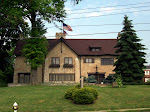
For more than 40 years, the Mahoning Valley Historical Society has been most readily identifiable as the owner of the Arms Family Museum of Local History, located at 648 Wick Avenue in Youngstown in the former residence of Olive F.A. and Wilford P. Arms. The 1905 Arts and Crafts-style mansion and garage buildings function as a historic house, regional history museum and archives facility.

"The Arms residence is the most significant artifact in our collection and it is our responsibility to care for it,” says Historical Society Executive Director H. William (Bill) Lawson. “But, it is also our responsibility to present the entire history of the Valley. The residence buildings were designed to be a private home, not a museum, and we are challenged every time we develop a new exhibit. Because of space limitations, we are unable to display the vast majority of our collections; we have little space for educational programs; and our ability to care for the collections is compromised because we have to store most of our artifacts away from the museum in spaces with inadequate climate control.”

To better meet the needs of the community, Historical Society’s Board and staff members carefully studied several locations in Youngstown’s central area before deciding in 2007 that the Burt Building was the ideal location in which to create the new Mahoning Valley History Center. “This site offers so much,” states Lawson.

“First, it is a historic structure. And, with over 22,000 square feet of available interior space, it is a great facility to enhance the level of service we provide to the residents of the Valley.” He adds, "Its location downtown is also important and will hopefully stimulate further redevelopment of the city’s core.”

The Historical Society is currently in a quiet fundraising phase to secure the dollars needed to rehabilitate and adapt the structure. When complete, the new History Center will:


· Feature interactive, inclusive exhibits that relate to all people who live in the Mahoning Valley, dedicated education space and research facilities in a state-of-the-art visitor destination

· Improve collections management by consolidating the artifacts into on-site, climate-controlled storage and conservation facilities

· Broaden the Historical Society’s appeal by hosting major traveling exhibitions, expanded on-site education programs, and off-site outreach for all interest levels

· Offer an exciting new downtown venue for cultural and community activities, and public and private gatherings for groups of all sizes

· Relieve the pressures currently being placed on the Arms Family Museum, and focus on interpreting this historic house and landscape and exhibiting the Historical Society’s exceptional decorative arts collection.

A national fundraising firm completed a Leadership Planning Study and recommended moving forward with a capital and endowment campaign to finance the project. An initial 10-month campaign process will include cultivating and enlisting campaign leaders and volunteers and the solicitation of gifts from area businesses, corporations, foundations, and individuals.

“Combined with the Historical Society’s valuable collections, this campaign will create a first-class history center for residents of the Mahoning Valley and beyond,” said Board President C. Reid Schmutz in announcing the plans. “In a sense, the new facility will become a ‘family learning center’ where generations of the past will meet generations of the future to learn about the Valley’s heritage.”

“This project represents a substantial investment of private funds in downtown Youngstown, and will result in an additional arts and entertainment anchor for our revitalized central business district” said Youngstown Mayor Jay Williams. He further states “I applaud and support the Mahoning Valley Historical Society’s commitment to address current operational challenges and to reach out to the broader community by developing a new regional History Center.”

Founded in 1875 and incorporated in 1909, The Mahoning Valley Historical Society educates and promotes an interest in the history of the Mahoning Valley by collecting, preserving, and developing material representative of the people who have inhabited the region. For more information about the Historical Society, details about the plans for the Burt Building, or to schedule a tour, call 330-743-2589.

Monday, March 3, 2008

History to Go - Irish in the Valley

In the Mahoning Valley Historical Society’s ongoing mission to provide an opportunity for the community to discover local history, the Young Leaders Advisory Board is pleased to announce the next event in the popular History to Go lecture series: Irish in the Valley.

Join the Mahoning Valley Historical Society on Monday, March 10th at 6:30 p.m. at St. Patrick’s Catholic Church, 1410 Oak Hill Ave. in Youngstown, for a presentation on the rich history of the Irish in the Mahoning Valley by Sally Murphy Pallante of The Irish American Archival Society.

This free event is partnered by St. Patrick’s Catholic Church and underwritten by: Rulli Bros.

For further information please phone the MVHS at 330-743-2589 or e-mail at: mvhs@mahoninghistory.org

Thursday, February 21, 2008

You Can Help!

One of the more frequent requests in the MVHS Archives is for images of national politicians that have made campaign stops in the Valley.

Here's how you can help:
If you attended any of the events hosted by Senators Clinton or Obama, or any other event related to their campaign, and have pictures, please consider donating a set of prints to the archives.
One request:
Prints produced at a photo lab (drug stores, photo shops, and online services) are best for long term preservation. Prints produced on ink-jet or home photo printers are not as stable, and could flake and fade over time.

For more information on donating items to MVHS please don't hesitate to contact the staff!


Please help the Mahoning Valley Historical Society fufill its mission of collecting and preserving your histoy - remember, these are your stories, your experiences, your history!
Image is of Franklin D. Roosevelt making a stop in downtown Youngstown.

Wednesday, February 13, 2008

The First Ice Cream Wagon

Bill Dwyre of the Los Angeles Times provides this story on Kelly Pavlik.
If Youngstown is a "cruddy" place, it is also a place of pride for Pavlik.
"The first ice cream wagon was in Youngstown, Ohio," he says. "You can Google it."

That's exactly right Kelly, the first ice cream wagon was developed by Harry Burt; here is the story!

The Significance of Harry Burt and "Good Humor" Bars

“Good Humor Suckers” grew to be one of the great icons of American summers of the urban and suburban mid-twentieth century. From the mid-1920s to the mid-1970s, the white refrigerator truck announced by a ringing bell, the white uniformed driver, the pleading with parents for money to buy an ice cream bar, and the gathering of neighborhood children became important, nostalgic memories for several generations of residents of a large area of the United States. Harry Burt, the Youngstown confectionery who strived to make the most delicious candy and ice cream, created the treat, patented the process of production and the machinery for its making, and created the unusual system for its distribution.


History of the Burt Confectionery & Creation of the "Good Humor" Bar

In downtown Youngstown between 1893 and 1922, Harry B. Burt (1875-1926) worked as a confectioner who produced candy, then added ice cream, soda fountain and grill to his store, expanding his business to include a bakery and restaurant, finally adding twelve refrigerator trucks to distribute Good Humor bars to Mahoning Valley and Youngstown city neighborhoods. All these successes he accomplished during the decades of Youngstown’s greatest social, commercial and industrial expansion.