Wednesday, March 10, 2010

Marie Marsh - Women's Airforce Service Pilots

Members of the WASP (Women's Airforce Service Pilot) are receiving Congressional Gold Medials in Washington D. C. today in honor of their service duirng World War II.


One of those "fly girls" was from Youngstown.

Marie Barrett Marsh


The following is excerpted from Marie Barrett Marsh, A Biography by her husband John E. Marsh.

Marie Barrett Marsh was born December 3, 1919, a daughter of Marie Lawlor and John P. Barrett. When her parents split in 1931, Marie spent a year living with an aunt in Chicago which greatly influenced her young life offering her many cultural and social opportunities. She returned to live with her mother and attended the Rayen School and Youngstown College. While at Rayen she received a $25 award for writing the best senior essay on the history of Ohio.

During the summer of 1940, Youngstown College, in cooperation with Bernard Airport, offered Civilian Pilot Training in which Marie enrolled – one of two girls in the class of 29 students. The course was funded by the U.S. Government and consisted of ground school courses necessary to pass the written exam, plus 35 hours of flying time to pass the flight test in order to obtain a Private Pilot’s License. Following this course, she took Secondary CPT, which included aerobatic instruction in an open cockpit biplane.

After graduating from college in 1941, Marie had a teaching contract in Mecca, Ohio. She taught math, general science, shorthand and typing. After completing a year of teaching at Mecca, she was hired by Dr. George Bowman, Superintendent of Schools in Youngstown, on a teaching contract. She worked in the Superintendent’s office until May of 1943 when she entered flight training at Avenger Field in Sweetwater, Texas.

The WASP Program
Marie graduated in November, 1943, class 43-W-7 as a W.A.S.P. (Women Air force Service Pilot). The WASP women pilots each already had a pilot's license. They were trained to fly "the Army way" by the U.S. Army Air Forces at Avenger Field Airport Sweetwater, Texas. More than 25,000 women applied for WASP service, and less than 1,900 were accepted. After completing four months of military flight training, 1,078 of them earned their wings and became the first women to fly American military aircraft. Except for the fact that the women were not training for combat, their course of instruction was essentially the same as that for aviation cadets.

After training, the WASPs were stationed at 120 air bases across the U.S. assuming numerous flight-related missions, relieving male pilots for combat duty. They flew sixty million miles of operational flights from aircraft factories to ports of embarkation and military training bases, towing targets for live anti-aircraft artillery practice and simulated strafing missions, and transporting cargo. Almost every type of aircraft flown by the USAAF during World War II was also flown at some point by women in these roles. In addition, a few exceptionally qualified women were allowed to test rocket-propelled planes, to pilot jet-propelled planes, and to work with radar-controlled targets. Between September 1942 and December 1944, the WASP delivered 12,650 aircraft of 78 different types. Over fifty percent of the ferrying of combat aircraft within the United States during the war was carried out by WASP pilots.

Marie was assigned to the headquarters of the Weather Wing of the Army Air Force in Asheville, North Carolina. Their duties included being pilots for the non-flying top brass in the Weather Wing, with flights to Army weather stations all over the U.S., courier service to the Pentagon, “mercy flights,” and flight testing the aircraft at the base after repair.

In 1944 Marie resigned from the WASP, as the need for pilots had drastically decreased. She married her high school sweetheart, John Marsh on June 27, 1944 and raised eight children in Vienna. Marie kept her pilot’s license current, and several of her children became involved with aviation. Marie was diagnosed with inoperable lung cancer in 1996 and died in April of 1997.

In 1999, Marie was inducted into the Ohio Women’s Hall of Fame


The WASP Legacy
All records of the WASP were classified and sealed for 35 years, so their contributions to the war effort were little known and inaccessible to historians. In 1975, under the leadership of Col. Bruce Arnold, son of General Hap Arnold, the WASPs fought the "Battle of Congress" in Washington, D.C., to belatedly obtain recognition as veterans of World War II. They organized as a group again and tried to gain public support for their official recognition. Finally, in 1977, the records were unsealed after an Air Force press release erroneously stated the Air Force was training the first women to fly military aircraft for the U.S.

This time, the WASPs lobbied Congress with the important support of Senator Barry Goldwater, who himself had been a World War II ferry pilot in the 27th Ferry Squadron. President Jimmy Carter signed legislation #95-202, Section 401, The G.I. Bill Improvement Act of 1977, granting the WASP corps full military status for their service. In 1984, each WASP was awarded the World War II Victory Medal. Those who served for more than one year were also awarded American Theater RibbonAmerican Campaign Medal for their service during the war.

On July 1, 2009 President of the United Barack Obama and the United States Congressawarded the WASP the Congressional Gold Medal. Three of the roughly 300 surviving WASPs were on hand to witness the event. During the ceremony President Obama said, "The Women Airforce Service Pilots courageously answered their country's call in a time of need while blazing a trail for the brave women who have given and continue to give so much in service to this nation since. Every American should be grateful for their service, and I am honored to sign this bill to finally give them some of the hard-earned recognition they deserve.”

Today, March 10, 2010, 200 surviving WASPs arrived at the US Capitol to accept the Congressional Gold Medal from House Speaker Nancy Pelosi and other Congressional leaders.

Internship Opportunity

The Mahoning Valley Historical Society (MVHS) in Youngstown, Ohio, seeks an intern for Summer Semester 2010 to work with its collection of historical materials at the Arms Family Museum of Local History, located at 648 Wick Avenue near the campus of Youngstown State University. The intern will assist with packing and moving collections objects and rearranging existing storage spaces to accommodate the collections being moved. This will involve lifting, carrying, and moving all sorts of museum objects including portraiture, furniture, costumes and other items housed in archival storage boxes, and more. Some museum objects will be moved off-site to a satellite storage space not far from the museum. Other curatorial duties may be assigned during the course of the internship.

The successful candidate should be willing to learn current standards in curatorial practices. Must possess excellent organizational and communication skills, be willing to work in a cooperative, team-based environment, and be able to lift 30 lbs.

Qualifications: Upperclassman undergraduate or graduate level student in museum studies, public history, history, or related field.

Stipend and Hours: A stipend totaling $1,400.00 will be paid in three (3) installments during the term. The internship totals 150 hours, or approximately 10 hours per week over the course of the summer. Intern hours should be completed during regular MVHS office hours (Monday – Friday, 9:00 a.m. – 5:00 p.m.). Other scheduling arrangements may be made at the discretion of MVHS staff.

Date Available: Monday, May 17, 2010

Application Closing Date: Open until the position is filled.

Contact: Mail resume to:
Summer 2010 Curatorial Internship
c/o Jessica D. Trickett
The Mahoning Valley Historical Society
648 Wick Avenue
Youngstown, OH 44502-1289

Or email with “Summer 2010 Curatorial Internship” as subject to: curator@mahoninghistory.org.

Or call: 330.743.2589

Friday, February 19, 2010

Rayen High School Time Capsule

In late August, the Youngstown Board of Education approved a resolution allowing the School District to donate the Rayen High School time capsule from 1921 to the Historical Society. This time capsule was placed in the cornerstone of the new building at Benita Avenue when it was dedicated on June 7, 1921, and it was recovered when the building was recently demolished.


The capsule consisted of a sealed copper container roughly the size and shape of a shoe box, which was manufactured by the John R. Squire Company, 355 East Wood Street, in downtown. In it was a 1920 silver quarter dollar and numerous paper documents from 1921 including a list of school board members, lists of faculty and administration for Rayen High School, lists of the members of each graduating class from 1914 to 1921, copies of the student magazine The Rayen Record, and recent editions of the Youngstown Vindicator and the Youngstown Telegram—the two daily newspapers at the time.


Another interesting piece in the time capsule is Charles F. Owsley’s business card. Mr. Owsley was the architect for the new Rayen School, and he wrote on this particular card that he was an 1899 Rayen School graduate.


Most of these materials, along with the time capsule container, are now on exhibit in the new aquisitions area of the Arms Family Museum.


The Vindicator published a nice story on the time capsule and it's significance.


Read it here.

Youngstown’s First High School

When William Rayen died in 1854, his will set aside $31,390 for a public academy to be known as “The Rayen School.” P. Ross Berry, an African American brick and stone mason, built the four-room brick building at the corner of Wick and Wood in the Greek Revival style of architecture. It opened its doors in 1866 with forty students and a predominantly female faculty. It graduated Youngstown’s first high school students several years later. The Rayen School was the city’s only high school until 1911.

Tuesday, February 2, 2010

African-American Women in the Civil War

African American Women
During the Civil War


A free program from the Ohio Humanities Council Speakers Bureau.


They were young and old, sisters, mothers, and grandmothers. Some were well-to-do, others were slaves. All resolved to be a part of the War that would ultimately determine the status of the Black man in America. This talk focuses on women of African descent—Susie King Taylor who nursed with Clara Barton; Elizabeth Keckley, dressmaker and confidant to Mary Todd Lincoln; Charlotte Forten, college graduate and first African American to teach freed slaves in the south, Harriet Tubman, Sojourner Truth, and others—and their unique contributions to the war effort. Dr. Jefferson discusses how such women, without access to political power and often lacking material and/or financial resources, acted with strength of character and will to make meaningful contributions to the war that impacted the world and changed a nation.
Thursday, March 4th
7:00 to 8:30 p.m.
Youngstown Historical Center (Steel Museum)
151 W. Wood Street, Youngstown

Annette Jefferson holds an MA in Black Studies and a Ph.D. in Social Work, and works as a development officer in Human Services. She has spent more than 20 years developing her presentation and performing as Sojourner Truth across the state, including as part of Ohio Chautauqua 2001. She hopes that people are uplifted by Sojourner’s story and will use that inspiration to bring about positive changes in their own lives.
This program is sposored by the Mahoning Valley Historical Society, YSU Center for Applied History and YSU Women's Studies. Funding for the program was made possible by the Ohio Humanities Council, a state affiliate of the National Endowment for the Humanities.

Thursday, October 15, 2009

Youngstown Art History

Happy 90th Anniversary to our neighbors at the Butler Institute of American Art! Excerpt from History of Youngstown and the Mahoning Valley, Ohio, Volume 1 By Joseph Green Butler

Butler Art Institute

This institution, the gift of J. G. Butler, Jr., to the City of Youngstown, is not only a realization of the ambition of its founder but fulfills the fond hope of the many residents of this community who are lovers of art. In the words of one of its admirers this art institute has an ennobling influence "not only because it provides a profitable recreational interest for leisure hours but because the contemplation of beautiful works of art exalts the spirit and awakens in the beholder a civic pride —a desire to have the city a fitting environment for its people."

Mr. Butler has been a collector of fine paintings for many years, and even before the establishment of the present institution made every effort to permit the people of Youngstown to share in the enjoyment of these works of art. When the Mahoning Institute of Art was incorporated on February 27, 1915, he was elected its president, this organization being the outgrowth of a movement started by the Ohio Federation of Women's Clubs. Under the patronage of the Mahoning Institute of Art many exhibits of paintings were brought to Youngstown and these aroused great interest, although the exhibits were made with difficulty, as Youngstown had no appropriate place in which they could be held.

In the erection of the Butler Art Institute this handicap has been overcome. The institute now has a permanent collection of seventy-five paintings of high artistic quality, suitably housed on the first floor of the art buildings, and to this collection will be added more paintings from time to time. This is only part of the opportunity afforded by the institution, however. It is the policy of the institute to invite outside exhibits in order to give the people opportunity to become acquainted with the works of great artists who are not yet included in the permanent collection. To give art a vital interest in the life of the community, lectures are also arranged and given to the public free of charge.
The educational department has now four well-organized classes— the local artists, who are allied under the name of the Mahoning Society of Painters, the Youngstown Art League, under the direction of Ceylon Hollingsworth, a picture study class for young children, and a class in drawing and painting for the upper grade students with special talent.

The first exhibit of paintings done by local artists was held in the winter of 1919-20, with results that were gratifyingly surprising to promoters, exhibitors and the public alike. The attendance was far beyond expectations, and those who attended were in turn astonished to find that Youngstown had so many talented artists. It was this showing that inspired the organization of the Mahoning Society of Painters, a body of men and women who have banded together to exchange ideas and to develop the talent given them. It is more than likely that, as a result of this movement, an exhibit by local artists will be an annual feature of the Art Institute.
The Institute is given over wholly to American art. It is unique in the United States in this respect, and it is certain that this will have a great influence in encouraging American artists and in leading them to greater efforts.

The Butler Art Institute itself is an unusually beautiful building of Georgia marble. The main facade is 120 feet long and 34 feet 11 inches in height. The central feature is a portico of three arches, and on either side are niches containing statues of Apollo and Minerva, the work of the great American sculptor, J. Massey Rhind. The portico gives access to the central hall, designed to receive sculpture and objects of art other than paintings.

The doorway opposite the entrance gives access to the staircase lending to the second floor, and also leads out of the gallery to the open court that will lie between the two proposed projecting wings of the building. It is proposed to arrange this court as a formal Italian garden, with fountains and with a loggia at the extreme end corresponding to the entrance portico. The doorways to the right and left of the central hall lead to the two principal galleries for paintings. The wings to be added will be entered through these rooms, the entrance being indicated now by doorway outlines that are temporarily housing paintings. The general style of the building throughout is of the Early Italian Renaissance. The park-like Institute grounds will extend from Wick Avenue through to Bryson Street, all the property for this purpose having been purchased by Mr. Butler. The structure was designed by McKim, Meade & White.

The building was formally opened on October 15, 1919, and on October 16, 1919, was opened to the public. The patronage since the opening day has been surprisingly large. It has not only been a gathering place for Youngstown lovers of the beautiful, but the Institute register daily records the names of art lovers from all sections of the country from the Atlantic Coast to California.

The Institute represents thus far an investment of approximately $500,000 in lands, building and paintings given by Mr. Butler from the private collection that he has been years in accumulating. In addition the founder has provided an endowment fund of $200,000 to insure the permanency of this great work. To enable this to be carried on the Butler Art Institute was regularly incorporated on December 27, 1919, by J. G. Butler, Jr., John Stambaugh, John W. Ford, Jonathan Warner and Henry A. Butler.

Wednesday, September 16, 2009

The Mahoning Valley Collects

Take a sneak peek inside the newest exhibit at the Arms Family Museum.

Included in the exhibit are collections of cameras, postcards, Native American implements, political memorabilia, guns and dolls.

The exhibit is open Tuesday-Sunday from 1:00 to 5:00 p.m. and will be on display through September 2010.


Tuesday, September 1, 2009

Uncovering the History of Wick Avenue

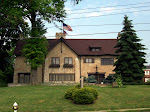
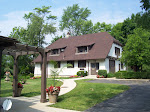
Though it’s no longer recognizable as the house shown in the 19th century photograph below, this structure is still very much part of the historic and cultural fabric of Youngstown’s Wick District. It was built by the widow of a local business leader who died of disease while serving in the Union Army during the Civil War. It was then occupied between 1866 and 1959 by three generations of the same family.

Emeline Warner Arms was a 35-year-old widow with six children when she began construction of her new home in 1865. Her husband, Myron Israel Arms (uncle of the Historical Society’s benefactor, Olive F. A. Arms), died on September 10, 1864, after contracting Typhoid Fever in his regiment’s camp in Virginia. The family moved into the house the following year, and there Mrs. Arms spent the rest of her days. Her youngest daughter and son-in-law, Harriet A. and Charles H. Booth, remained in the house after Mrs. Arms’ death, and completely remodeled it early in the 20th century, transforming its exterior design from Italianate to an Italian-style villa, as shown below.


Harriet Arms Booth lived in the house until her death in 1952 at the age of 91. Her daughter and son-in-law, Jane A. B. and Philip H. Schaff, Sr., moved in afterward with their two youngest children. In 1959 the Schaffs sold the house to First Christian Church, located across Spring Street since 1934. The church renamed the building Disciple House, and used it for a variety of functions until 1966, when they sold the property to Youngstown State University. YSU officially changed its name from Disciple House to Alumni House in 1983.

Though the name and function of the property changed over the years, it remains at 606 Wick Avenue as the oldest surviving of the grand houses to be built in this neighborhood in the 19th and early 20th centuries. Join us on Sunday afternoon, September 13, at 1:00 p.m., for free walking tours along Wick Avenue as part of the Founders Day Open House at the Arms Family Museum of Local History. There is diverse historic and modern architecture to see, and many more interesting stories to be told!