Sunday, April 10, 2011

David Tod: Ohio's Civil War Governor


An excerpt taken from

Mahoning Memories

A History of Youngstown and Mahoning County

by Frederick J. Blue, William D. Jenkins, H. William Lawson, & Joan M. Reedy


In the mid to late 1800's David Tod was one of the most successful of a growing group of Youngstowners who combined business interests, such as the canal and railroad, with politics. He was the son of a prominent attorney, George Tod of Connecticut, who had come to Youngstown in 1800 with his wife Sarah and two children. David was born in 1805, was raised at the family's expansive farm at Brier Hill, and attended neighborhood schools and the Burton Academy in Geauga County before studying law and being admitted to the Ohio bar in 1827. He was married in 1832 to Maria Smith of Warren. They had three daughters and four sons. When Tod inherited his father's estate in 1841, he continued his business and political activities and opened one of the first coal mines in the Valley. In addition to shipping his coal west and then north to Lake Erie via the Pennsylvania and Ohio canal, he helped to pioneer the use of the high-quality "Brier Hill" coal as a fuel in local blast furnaces in the reduction of iron ore. His economic pursuits led from the canal to railroads. In combination with promoters from Youngstown, Warren and other areas he helped form the Cleveland and Mahoning Railroad and served as its president from 1858 until his death in 1868. He established the Brier Hill Iron and Coal Company, having bought the iron works of the Akron Manufacturing Company and moving it to his Youngstown properties. He thus helped to strengthen the Valley's iron industry.


Despite his prominence in the economic development of the Mahoning Valley, Tod was even better known throughout the state and nation as a Democratic politician. After running unsuccessfully for governor in 1844 and 1846, losing in both instances to Whig candidates by narrow margins, he was appointed by President James K. Polk as minister to Brazil, a post he held for five years. Between 1851 and 1861, he concentrated on his coal, iron and railroad interests in the Mahoning Valley before returning to politics.


The Civil War brought Tod his greatest political prominence. A strong supporter of Democratic presidential candidate Stephen A. Douglas in 1860, he played a central role in the party convention in Baltimore, which chose the Illinoisan to oppose Abraham Lincoln. Following Douglas's defeat, the Union party combined Lincoln's Republicans with War Democrats like Tod who supported the military effort against the Confederacy. Having helped organize a Youngstown company of troops as a part of the Seventh Ohio Voluntary Infantry, Tod was a logical candidate for governor on the Union ticket in 1861. He won a substantial victory, and as Youngstown's only governor in almost two hundred years of Ohio history, he was forced to deal with virtually insolvable problems.


During Tod's tenure, the war came briefly into Ohio with the raid of Confederate leader Colonel John H. Morgan across the southern counties and as close to the Mahoning Valley as Salineville in Columbiana County. Tod was successful not only in his preparations for the military defense of Ohio but also in providing for the welfare of Ohio soldiers and in dealing with the politics of civilian critics and the incessant demands for military promotions. Nonetheless, he antagonized enough of his fellow Union party colleagues to deny him renomination in 1863. In mid 1864 he rejected Lincoln's offer to appoint him secretary of the treasury, preferring to spend his declining years managing his many economic ventures.

Thursday, March 24, 2011

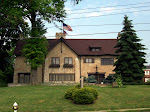
The Arms Family Museum - Celebrating 50 Years!


The Mahoning Valley Historical Society began a rise in the 1950s with an increase in budgets, collections, and property that brought about its present form. At the Annual Meeting in 1955, James L. Wick, Jr. was elected both president and treasurer of the historical society. Mr. Wick considered it a priority to obtain a permanent home for the Mahoning Valley Historical Society and its manuscript and artifact collections.

Encouraged by Grace Heath Butler, Second Vice-President, Mr. Wick talked to his distant cousin, Olive Freeman Arms Arms, about her intention to leave her home to the Mahoning Valley Historical Society. Mrs. Arms was aware of the suitability of her home to serve as a museum, and wished to entrust the preservation of both the house and her personal collection to a trustworthy institution.


Mrs. Arms left the property at 648 Wick Avenue to the MVHS in memory of her father, Charles Dayton Arms, a founding member of the historical society, and her mother, Hannah Wick Arms. In addition to the gift of the property, its buildings, and contents, Olive Arms added to her bequest an endowment fund for “support, upkeep, maintenance, and operation.” She died in August of 1960. MVHS assumed ownership of Greystone and its contents in March of 1961.


From the 85th Annual Meeting of the Mahoning Valley Historical Society September 12, 1960. After the meeting was called to order by President James L. Wick, Jr., he paid tribute to Mrs. Wilford P. Arms, an honorary President who passed away at 4:00 p.m. on August 25. Resolved Further, that the members of The Mahoning Valley Historical Society, individually and collectively, take this opportunity to record upon the minutes of this Society their sincere appreciation of the vision and action of Mrs. Arms in making possible the establishment and maintenance of a home for the Society wherein it can preserve its priceless collection of historical documents and other articles of educational interest relating to the history and settlement of the Mahoning Valley and thereby add to the growing cultural developments within this community. Mr. James Henderson asked for the floor and said: “Judge Ford, will you please take the chair and entertain a word which, I am sure, we all feel it would be unthinkable to leave unspoken before this meeting adjourns. We witness here today the happy culmination of all our hopes and dreams for our beloved Historical Society. Only the man himself will question the assertion that just one person, from beginning throughout, and in almost every detail, is in 99% measure responsible for this very real accomplishment. Therefore, I propose we rise to our feet and, with our hearty and affectionate plaudits, express to our own Mr. James L. Wick, Jr., however inadequately, our heartfelt gratitude and admiration.” Everyone present rose to their feet and gave Mr. Wick a rousing ovation.


From Executive Director Bill Lawson:

The 50th anniversary of the acquisition of Greystone, Olive and Wilford Arms’ magnificent Wick Avenue residence, is a milestone in the history of the Mahoning Valley Historical Society. This event was a quantum leap for the organization because it propelled us to a new and greater level of operation that could only be hoped for previously. There have been several other quantum leaps for MVHS since then, including opening of the Archival Library, acquisition of the Business and Media Archives collection, being named a perpetual beneficiary of the Anne Kilcawley Christman Foundation and, most recently, undertaking the Campaign for the Mahoning Valley History Center. But establishing the Arms Family Museum really defined the Historical Society as an organization for the first time, and gave MVHS members, board members and staff the opportunity to foster excellence through good policies and great programs over the next three generations. This high level of function has been recognized by our professional peers through accreditation by the American Association of Museums since 1977. And thousands of individuals and families benefit from participating in our museum-based programs every year. So, Happy Anniversary, Arms Family Museum! And thank you, Olive F. A. Arms, for your great gift to our community.

Wednesday, November 17, 2010

What Happened to Youngstown Township?

The Mahoning Valley is part of a tract of land that once belonged to the state of Connecticut. Connecticut’s Western Reserve was bordered north and south by Lake Erie and the forty-first parallel, and extended 120 miles westward from Pennsylvania. In 1795, Connecticut sold a portion of the Reserve to a group of speculators known as the Connecticut Land Company.
The company surveyed the land, marking several townships of twenty-five square miles to sell to individuals who would in turn subdivide the townships into smaller parcels for sale.


In 1796, John Young of Whitestown, New York, set out to view the land for himself before making a purchase. In February of 1797, Young visited Connecticut and purchased from the Connecticut Land Company Township Two in the Second Range of the Western Reserve. The sale was finalized on April 9, 1800.The first Court of Common Pleas and General Quarter Sessions was held at Warren on August 25, 1800. During that session, the Court divided Trumbull County into civil townships. The governmental township of Youngstown (not the same as the 5 miles squared township) comprised most of what is now Mahoning County and included the townships of Poland, Coitsville, Hubbard, Liberty, Youngstown, Boardman, Canfield, Austintown, Jackson and Ellsworth.


Youngstown Township ceased to exist on November 17, 1913 when its remaining area was annexed by the City of Youngstown. Parts of Boardman, Liberty and Coitsville Townships were also affected in 1929-1930 when the City of Youngstown added to its incorporated area through additional annexations.


MVHS is fortunate to have an original record book for Youngstown Township covering 1802-1829. The ledger contains township minutes, road work, records of Overseers of the Poor, lists of township officers, apprenticeships, and other township business. There is a section in the back which records earmarks and brands registered for residents of the township, used as a means to identify livestock. The ledger was given to MVHS by Senator Benjamin Franklin Wirt in 1911. There is a transcript available for the first section of the ledger.

Thursday, September 16, 2010

The Campaign for the Mahoning Valley History Center

The Mahoning Valley Historical Society is pleased to announce the completion of the plans for the restoration and renovation of the historic Harry Burt/Ross Radio building to create the new Mahoning Valley History Center in downtown Youngstown. To date, the Historical Society’s Campaign for the Mahoning Valley History Center has raised $4,346,190, which is 72% of the campaign goal of $6 million.

Founding donors include the Frank and Pearl Gelbman Foundation, Mr. and Mrs. Paul J. Thomas, and Jeanne D. Tyler. Other lead gifts include contributions from the John S. and Doris M. Andrews Memorial Fund, the Ward Beecher Foundation, the John and Loretta Hynes Foundation, the City of Youngstown, Roberta Marsteller Hannay, the Pollock Personal and Company Foundations, and Mary Alice B. Schaff.

The Campaign is introducing its public phase to incorporate broad-based community support. In celebration of local entrepreneurship and the creation of the Good Humor® brand, the Historical Society is launching the Harry Burt Donor Bar campaign. The public is invited to purchase a metal plaque imprinted with an ice cream bar—inspired by Harry Burt’s invention of the Good Humor® ice cream bar on a stick—to be produced by Wendell August Forge in Grove City, Pennsylvania. The plaques will include an engraving of the donor’s choosing, and be permanently displayed in the History Center.


“The partnership between the Historical Society and Wendell August Forge is perfect," says Campaign Director Carol Potter, "these two historic entities both have a tradition in hand-crafted materials. These tiles will be a great addition to the architecture of the historic History Center building.”

Donor Bars will be available in three giving levels: $125 for aluminum, $250 for bronze, and $500 for copper. For more information, please contact the Historical Society at 330-743-2589.

Renovation work will begin at the end of September. The new History Center is expected to be completed in the first half of 2012.

The Historical Society also is unveiling a new logo showing the two historic sites now under their operation. The Arms Family Museum will continue to operate as a historic home and museum, with a new focus on decorative arts and the Arts & Crafts design movement. The new History Center will feature exhibits on the history and heritage of the Mahoning Valley as well as provide new educational and meeting space.

"The History Center will be much more than a museum," says Executive Director Bill Lawson, "this will be a community center based the region's history that can be used to celebrate the life events that create a family's history. We hope that the wonderful ballroom and exhibit spaces become the backdrop for weddings, graduations, reunions, and dances. We want the community to feel at home in our building, and see their story told."


Tuesday, June 22, 2010

2010 Historic Preservation Award Winners

Community Revitilization Award

John Stark Edwards House & Museum – Interior & Exterior Restoration


The John Stark Edwards House was built in 1807, and enlarged in 1809 by one of the first pioneers to arrive from Connecticut. This home was occupied by three families: The John Stark Edwards Family; the Thomas Denny Webb Family; and the Iddings Family. It was a residence until 1938 when the last survivor turned the house over to the state. Martin Davey, Governor of Ohio at the time, gifted the structure to the Trumbull County Historical Society. The house was moved twice and now sits in Warren’s historic district. In 2006 The Historical Society received grant money through the Ohio Cultural Facilities Commission and began a restoration of the interior including ceilings, walls, floors and windows; as well as exterior renovations including a new roof, spouting, repair and repainting of the original cedar siding, new shutters with the original metal hardware, reinforcing of stone walls and accessibility improvements. Project designers include: Harry Kapouralos, project manager; William Sauer, architect; Don Hazel, Trumbull County Historical Society President; Gina Bodor, grant coordinator; and Martha Ellers, advisor.


Community Revitalization Award
National McKinley Birthplace Memorial – Exterior Restoration


The National McKinley Birthplace Memorial, in Niles Ohio, is a tribute to the birth place of our 25th President. Designed by the New York Architectural firm of McKim Mead & White, the memorial was completed in 1915. The facility consists of a central courtyard to house the John Massey-Thind sculpture of President McKinley a public library, and a museum with an auditorium. Restoration included cleaning and repair of terra cotta fascia and soffit within the courtyard, repairing and restoring marble pavers, repair of the original clay tile roof and copper flashing, re-glazing of original windows and replacing three large skylights that had been roofed over for the past 20 years. Owner of this property is the National McKinley Birthplace Memorial Association Board of Trustees and Project designer was Balog Steines Hendricks & Manchester Architects.


Commercial Revitalization Award
Realty Tower Apartments – Exterior & Lobby Restoration


Designed by noted Youngstown architect Morris Scheibel, this 13-story building was built by the Realty Guarantee & Trust Company for their offices in 1924. The building has been listed on the National Register of Historic Places since 1980. The Frangos Group purchased the building in December 2000, and later hired City Architecture, Inc. of Cleveland, Ohio to design an adaptive reuse project to convert the building from offices to apartments. Construction formally began in 2008. Along with renovation of the interior spaces, the project included restoration of the original cornice and other historic exterior finishes, and restoration of plaster, metal, stone and tile surfaces in the historic lobby.


MVHS Directors Award of Achievement
C. Gilbert James, Jr.

Mr. James has been a strong advocate for local history and historic preservation for five decades including: establishing the Western Reserve Village on the Mahoning County Fairgrounds in Canfield; spearheading the campaign to raise funds to preserve and restore the Mahoning Valley Historical Society’s Carriage House, and adaptively reuse it as the MVHS Archival Library and meeting center; and being an active participant with several historical agencies including MVHS, the Canfield Historical Society, the William Holmes McGuffy Historical Society, the Western Reserve Village Foundation, the International Institute of Youngstown, the former Medical Museum at St. Elizabeth Hospital and the Melnick Medical Museum at Youngstown State University.


MVHS Directors Award of Achievement
Patricia Sweet


A tireless advocate for preservation, Mrs. Sweet led the efforts of the Historic Preservation Committee, Board of Directors and staff to create the annual Mahoning Valley Historical Society Historic Preservation Awards program in 2005. She also was instrumental in securing financial support from the Raymond John Wean Foundation to underwrite this program over all of the past six years. The Historic Preservation Awards program has been a highly successful, visible and positive community outreach for the Historical Society in its goal to advocate for more diverse and effective historic preservation efforts in the region.


MVHS Directors Award of Achievement
Leland Van Camp


Mr. Van Camp has been a cornerstone in the small community of Beloit for many years. In 2004, he provided the impetus to organize the Beloit Area Historical Society; the vision for acquiring and preserving an old tin shop as the home for the organization; and continues to advocate for the collection of artifacts related to Smith Township. Mr. Van Camp operates a gas station, with its restored vintage gas pump, antique candy counter and shelves filled with gas and oil memorabilia, it also can be considered a historic treasure, and spends many hours volunteering for community causes. Nominator David Mannion had this to say about Mr. Van Camp: “His tireless dedication to this community has truly been a blessing, and his keen interest in preserving the history of the Beloit area is very inspiring to the next generation of citizens considering historical preservation efforts and community service.”


See more images of the winning projects!


Wednesday, March 17, 2010

Daniel Sheehy

From History of Youngstown and the Mahoning Valley Vol. 1
By Joseph Green Butler

Daniel Sheehy was born in Tipperary County, Ireland, in 1759. He was given a classical education, having been destined for the law or the priesthood, but early in life left his native land to carve out a fortune in the New World. His decision was hastened by the fact that he was an outspoken enemy of the British government, and, impulsive in temperament, plunged wholeheartedly into the movement for Irish freedom. With two of his near relatives executed for opposing British domination and his own life certain to be forfeited if he remained in Ireland, Sheehy came to America and enlisted in the Revolutionary Army.

Image from Irish in Youngstown and the Greater Mahoning Valley of Jane McLean Sheehy, son Daniel Jr., and wife Charlotte Pearson Sheehy.

Serving until the end of the Revolution, Sheehy located in Connecticut or New York State and met John Young at Albany, New York, in 1796. Sheehy had $2,000 in gold which he wished to invest in land and he accepted John Young's proposal to emigrate to the Western Reserve. He contracted with Young for 1,000 acres of land, a contract that later caused difficulty between Sheehy and Young. Not having a title himself until 1800, Young could not give title at that time to sub-purchasers and Sheehy alleged that in 1799 Young made a second sale of part of Sheehy's land at an advance of 50 cents an acre. To prove his rights Sheehy was forced to make two trips to Connecticut, both of these being made afoot through the wilderness in the dead of winter. An adjustment was finally reached by which Sheehy retained title to 400 acres of land but relinquished his claim to another 600 acres.
For threatening Young's life during this controversy Sheehy was arrested and fined $25, but that their differences were later settled amicably is apparent from the fact that. Sheehy's second son was named after the founder of 'the city. According to one account this was a feminine wile adopted by Sheehy's wife, and really brought about the adjustment of the dispute instead of following it. This pioneer woman was born at Ligonier, Westmoreland County, Pennsylvania, in 1775, a daughter of Robert McLain, an early settler of Central Pennsylvania. Having accompanied Hillman, Young and the others to Beavertown to celebrate the Fourth of July, 1797, Sheehy there met Jane McLain and later he journeyed to Beavertown on horseback for the wedding ceremony. Sheehy died at Youngstown on January 20, 1834, and his widow in 1856, leaving numerous descendants here.

Tuesday, March 16, 2010

The Puddler Poet

Michael McGovern, the “Puddler Poet” was born in Castlerea, Roscommon, Ireland, in 1847 or 1848 at the height of the Famine crisis. Like many refugees, McGovern first immigrated to London, and there he met and married Anne Murphy in 1872. They eventually came to the United States, circa 1881-1882 first to Pennsylvania and then to Youngstown, Ohio where McGovern found work as a puddler in the rolling mills. Puddlers were highly skilled iron workers who labored in heat and smoke and stirred molten iron which was then shaped and rolled into ingots. While McGovern stirred the iron, he also stirred his thoughts and impression, gathering the words to be molded into the poetry for which he is best remembered. As the McGovern family settled into permanent life in the Mahoning Valley, his poems became numerous. McGovern wrote about the mills, the laborers, Ireland, love and the injustices imposed upon the working class. His writings appeared in many newspapers and Irish-American periodicals. His book of poetry, Labor Lyrics, appeared in 1899 and received acclaim through the United States.


Labor’s Cause

We meet today to sympathize
With Homestead men who seek redress;
To soothe with hope the widow’s cries
And aid them in their sore distress;
To join in saying, that as sure
As reigns a supreme judge on high,
Who sees what men who toil endure,
The cause of labor shall not die.

It was not Washington’s intent,
Whose patriot soldiers overthrew
Oppression that these states were meant
As Eldorados for the few.
Their fight is ours again today,
Their wrongs and ours the same imply,
And in those patriots’ names we say
The cause of labor shall not die.

Send forth the words on spirit wings
That wealth no longer shall maintain
In this free land its petty kings,
With armed thugs to guard their reign.
With justice in this noble fight
Wealth’s private armies we defy;
With votes as weapons wielded right,
The cause of labor shall not die.