Tuesday, November 6, 2007

History to Go

County Seat: History of the Mahoning County Courthouse

Saturday November 10th
3:00 to 4:30 p.m.

Free

The Mahoning County Courthouse is one of the most recognizable buildings in the Valley, but what doyou really know about it? How did it come to be built in the center of Youngstown and is Canfield still bitter about it? Who were the architects and artists that designed the Courthouse and its decoration and exactly what are the namesof those intimidating figures above? If you want the answers to these questions, or just a chance to leisurely explorethis wonderful building, then the Mahoning Valley Historical Society encourages you to join them for an informal tourwhere guides fill you in and the County Justices graciously welcome you into their courts.


This event is partnered by: Mahoning County Courts
This event is underwritten by: Youngstown CityScape

Thursday, October 18, 2007

Arby's and Morgan's Wonder Boy Restaurants

The original, very first Arby’s Restaurant was located at 90 Boardman-Canfield Road (Route 224) at the corner of Route 224 and Amherst Avenue, the present location of the store Wild Birds Unlimited. Leroy and Forrest Raffel opened the restaurant July 23, 1964, selling it a year or so later to Sam Feldman. The name is from “RB” for Raffel Brothers. In 1965 the brothers followed up with opening a branch in Akron, Ohio. The Raffel Brothers, originally from New Castle, PA, were also in the restaurant supply business according to the Youngstown area city directories.

Corporate headquarters for Arby’s Inc. was located on Boardman Street, then along Rayen Avenue before moving to Colonial Drive and then Belmont Avenue. The corporation was purchased by Royal Crown Companies, Inc. in 1976 and the headquarters were moved out of the Mahoning Valley to Atlanta, GA by 1979.


Morgan’s Wonder Boy Drive In Restaurant was located at 7240 Market Street, at the corner of Route 224, in the vicinity of what is now Circuit City (#7230) with Walgreens (#7295) across the street.

Definition of Youngstown Township

The definition of the boundaries of Youngstown Township have been of a fluid nature in the history of the Mahoning Valley. From 1800 to 1913 the township changed its shape and size dramatically before disappearing into the City of Youngstown.

Historical Collections of the Mahoning Valley. Volume I, Youngstown, OH: Mahoning Valley Historical Society, 1876, page 20 provides the following:

“The first Court of Common Pleas and General Quarter Sessions was there (Warren) held on August 25, 1800. At that Court the county was divided into townships for civil purposes. The township of Youngstown, as then organized, comprised the now townships of Poland, Coitsville, Hubbard, Liberty, Youngstown, Boardman, Canfield, Austintown, Jackson and Ellsworth. George Tod was appointed prosecuting attorney of the county, and James Hillman was appointed constable of Youngstown….”

Joseph G. Butler, Jr. in his History of Youngstown and the Mahoning Valley. Volume 1. Chicago: American Historical Society, 1921, page 59; quote from 106 gives further insight. August Term, 1800 set up eight townships in Trumbull County. These Civil Townships were called the Lower Townships: Youngstown, Warren, Vernon, Middlefield. Youngstown Township was an “artificially created civil township embracing Poland, Boardman, Canfield, Ellsworth, Coitsville, Youngstown, Austintown and Jackson” and also Liberty and Hubbard Townships.

For those who are seeking historical information or families in this early time frame, knowledge of the boundaries of the artificial township of Youngstown may be of assist. Youngstown Township’s boundaries were firmly established by the time Mahoning County was split off from Trumbull and Columbiana Counties in 1846, having taken on the designation as Township 2 Range 2. Poland Township received the designation of Township 1 Range 1.

Youngstown Township ceased to exist in 1913 when it was annexed by the City of Youngstown. Parts of Boardman and Coitsville Townships were also affected in 1929-1930 when the City of Youngstown added to its territory through additional annexations.

Where were and what are the Salt Springs?


Natural salt springs were originally located in what is now Weathersfield Township, Trumbull County near present day Niles. Maps dated circa 1755 identified the location, known to early settlers and trappers, as well as Native Americans. Although the springs contained a low concentration of salt, it was an important staple for man and beast alike. The name Mahoning is believed to be derived from the native term for salt lick.

Above: Illustration of the Salt Springs, unidentified source
Below: portion of Henshaw's Map of Trumbull County showing location of Salt Springs, 1830

General Samuel Holden Parsons set out to purchase 25,000 acres of land from the state of Connecticut, which included parts of the current townships of Lordstown, Weathersfield, Jackson and Austintown, encompassing the salt springs. As a result this area became known as the Salt Springs Tract. Parsons traveled to the area and set up a station to extract the salt by the process of boiling, but drowned in November 1789 prior to fully completing the purchase of the land. Parson’s holdings reverted to the state of Connecticut which later sold off the tract in parcels, including the sought after salt springs. Cabins were built near the springs to serve as shelter for those who sought out the mineral.


Views showing location of the Salt Springs, taken by James L. Wick, Jr. August 11, 1963

The level of saline contained in the water was not sufficient for its use to continue much past the early 1800s. Later much of the original springs were covered by tracks laid by the Baltimore and Ohio Railroad Company. In 1952 a small spring still bubbled “through a drain tile” winding “through a small valley off the Carson-Salt Spring Road.”


Suggested Reading:
Historical Collections of the Mahoning Valley, Volume I. Youngstown: Mahoning Valley Historical Society, 1876, pages 172-173.

Przelomski, Ann N. “Salt Spring Once Important to Area.” Vindicator, 13 April 1952, page A-24.

Howe, Henry. Historical Collections of Ohio, Volume II. Cincinnati, OH: C. J. Krehbiel & Co., pages 175-178 and pages 659-662.

Monday, September 17, 2007

Remembering Black Monday

Those of us who were living in the Mahoning Valley and aware of the issues at that time always will remember what a traumatic and pivotal day was Monday, September 19, 1977. Thirty years later, our historical perspective tells us that day marked the beginning of the end of the region’s iron and steel industry as it had been known in the community and throughout the world for several generations. But the impact and aftermath of Black Monday news meant so much more to Valley residents then and now.

The notification by The Youngstown Sheet & Tube Company of shutdowns and massive layoffs at their Campbell Works on that day was followed by similar announcements at Sheet & Tube’s Brier Hill Works, all of U.S. Steel Corporation’s District operations and the Republic Steel Corporation in Youngstown between 1979 and 1981. In all, more than 10,000 good paying jobs were lost in the local steel industry. Thousands more jobs were lost in supporting and related businesses such as construction, trucking, railroading, foundries and steel fabrication. Large portions of the real estate and income tax base for local governments in McDonald, Youngstown, Campbell and Struthers evaporated in a matter of months.


Campbell Works in 1979 photo by Daryl Plant


Many local residents who remembered the announcement of the attack on military installations at Pearl Harbor on December 7, 1941, declared that Black Monday was an equally catastrophic event. More recently the attacks in New York City and Washington DC on September 11, 2001, joined Black Monday and Pearl Harbor as days of shock and distress in the minds of Mahoning Valley residents. Many of us remember exactly where we were when we first heard the news on Black Monday. I had just completed the first day of the third week of my freshman year as a student at Boardman High School when I returned home to learn about the Youngstown Sheet and Tube Company’s decision through special reports from the local television news. At the time no one in my family was working in the steel industry, but I still understood and felt the gravity of the announcement.

Over the course of my high school career, many boys and girls I had known from grade school left—some in the middle of school years, most during the summers—as their parents accepted transfers from Youngstown Sheet & Tube, U.S. Steel or Republic Steel to work in other plants around the country, or lost their jobs and went out in search of employment elsewhere. Not long after my high school graduation in June 1981, Republic Steel phased out all remaining basic steel operations at their Haselton plant, and the last blast furnace in Youngstown proper went cold.

The community’s response to this economic crisis was equally significant to the announced shutdowns. Within weeks of Black Monday, a group of religious, civic and political leaders, led by the Most Reverend James Malone of the Catholic Diocese of Youngstown and the Most Reverend John Burt of the Episcopal Diocese of Ohio, launched the Ecumenical Coalition of the Mahoning Valley with the charge of acquiring, modernizing and reopening the Campbell Works under community-worker ownership. The Coalition’s proposal sparked an intense national public policy debate and influenced government officials, organized labor and American business leaders in managing and negotiating the phasing out of other large manufacturing facilities in the years that followed. The Ecumenical Coalition’s proposal for worker-community ownership failed in large part because the Federal Government refused to provide very large loan guarantees in order to buy and modernize the steel mills and furnaces.

Thirty years later many individuals—along with local governments, school districts and social service agencies—still confront the economic and emotional aftermath of the collapse of the local steel industry. New generations were born and came of age with no concept of what steel meant to this community. Yet all who live, work and go to school in the Valley today are affected by the wake of the transformation that occurred, however unwelcome or unknown are their memories of Black Monday.

On Wednesday, September 19, at 7:00 P.M. in the Youngstown Historical Center (Steel Museum) on Wood Street in downtown, the community will gather for a program to mark 30 years and to take account of where we are now. The local news media will also provide news stories and programs in print, radio and television formats. As the Mahoning Valley community continues to create its present and future in the 21st century, it is very important, if painful as well, to remember Black Monday and all that resulted from it.

H. William Lawson
Executive Director
The Mahoning Valley Historical Society


Friday, September 7, 2007


MVHS Founders Day Dinner

Join MVHS Members and friends at the Tod Homestead Cemetery, 2200 Belmont Ave., on Tuesday, September 18th from 5:00 to 7:30 p.m. for the annual Founders Day Dinner.

Cost for the evening is $29 for MVHS members and $34 for guests. Reservations can by made by calling 330-743-2589 or email to mvhs@mahoninghistory.org by September 12.

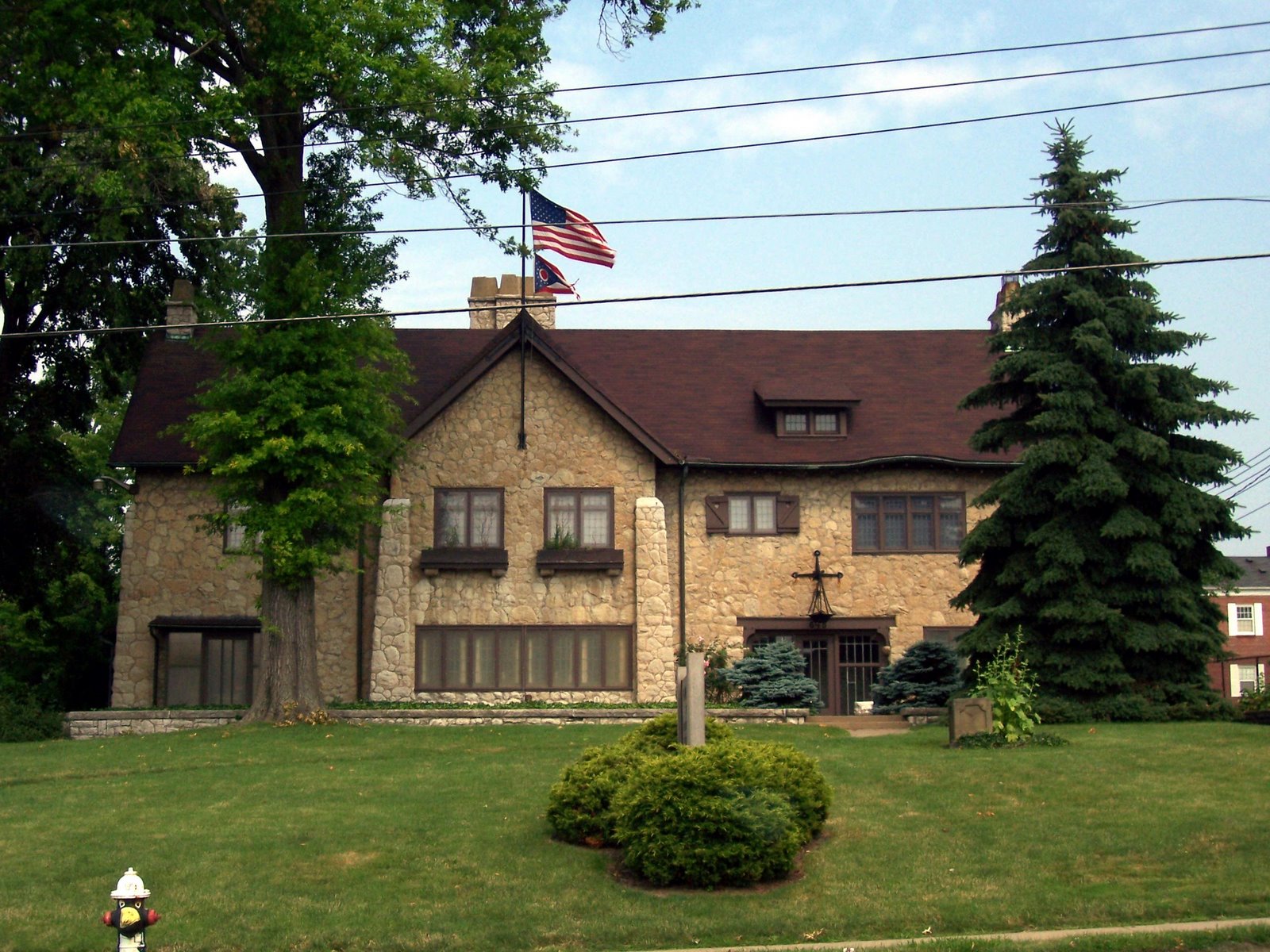
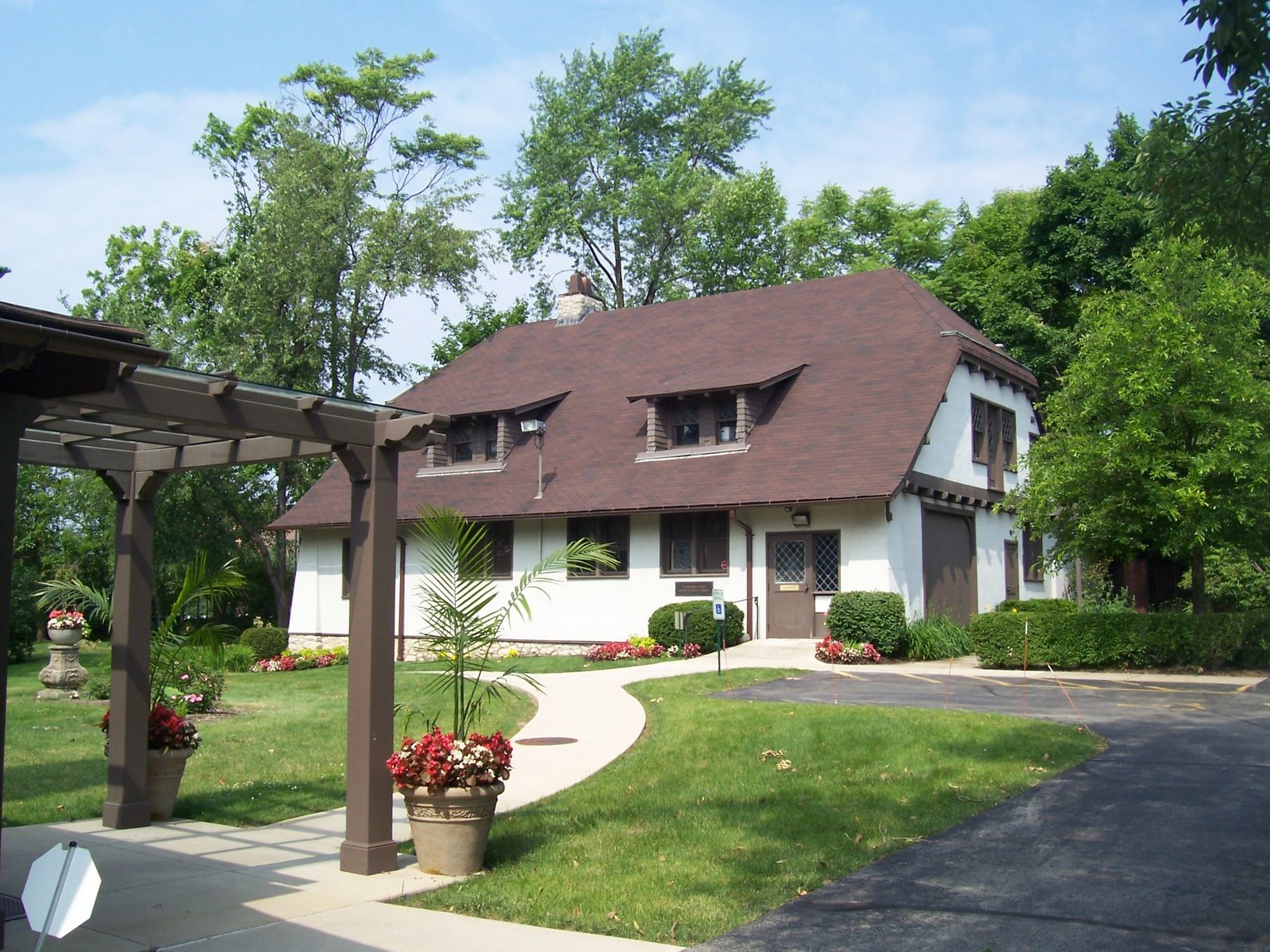
The magnificent chapel and office structure was built from 1917 to 1919 and was designed by prominent Boston architect, Julius A. Schweinfurth. Other area structures designed by Schweinfurth include Slippery Rock Pavillion and Parapet Bridge, two prominent Arts & Crafts elements in Mill Creek Park.

The Tod Homestead Cemetery Association received one of MVHS' Historic Preservation Awards for Commercial Revitilization in 2007.