Wednesday, November 17, 2010

What Happened to Youngstown Township?

The Mahoning Valley is part of a tract of land that once belonged to the state of Connecticut. Connecticut’s Western Reserve was bordered north and south by Lake Erie and the forty-first parallel, and extended 120 miles westward from Pennsylvania. In 1795, Connecticut sold a portion of the Reserve to a group of speculators known as the Connecticut Land Company.
The company surveyed the land, marking several townships of twenty-five square miles to sell to individuals who would in turn subdivide the townships into smaller parcels for sale.


In 1796, John Young of Whitestown, New York, set out to view the land for himself before making a purchase. In February of 1797, Young visited Connecticut and purchased from the Connecticut Land Company Township Two in the Second Range of the Western Reserve. The sale was finalized on April 9, 1800.The first Court of Common Pleas and General Quarter Sessions was held at Warren on August 25, 1800. During that session, the Court divided Trumbull County into civil townships. The governmental township of Youngstown (not the same as the 5 miles squared township) comprised most of what is now Mahoning County and included the townships of Poland, Coitsville, Hubbard, Liberty, Youngstown, Boardman, Canfield, Austintown, Jackson and Ellsworth.


Youngstown Township ceased to exist on November 17, 1913 when its remaining area was annexed by the City of Youngstown. Parts of Boardman, Liberty and Coitsville Townships were also affected in 1929-1930 when the City of Youngstown added to its incorporated area through additional annexations.


MVHS is fortunate to have an original record book for Youngstown Township covering 1802-1829. The ledger contains township minutes, road work, records of Overseers of the Poor, lists of township officers, apprenticeships, and other township business. There is a section in the back which records earmarks and brands registered for residents of the township, used as a means to identify livestock. The ledger was given to MVHS by Senator Benjamin Franklin Wirt in 1911. There is a transcript available for the first section of the ledger.

Thursday, September 16, 2010

The Campaign for the Mahoning Valley History Center

The Mahoning Valley Historical Society is pleased to announce the completion of the plans for the restoration and renovation of the historic Harry Burt/Ross Radio building to create the new Mahoning Valley History Center in downtown Youngstown. To date, the Historical Society’s Campaign for the Mahoning Valley History Center has raised $4,346,190, which is 72% of the campaign goal of $6 million.

Founding donors include the Frank and Pearl Gelbman Foundation, Mr. and Mrs. Paul J. Thomas, and Jeanne D. Tyler. Other lead gifts include contributions from the John S. and Doris M. Andrews Memorial Fund, the Ward Beecher Foundation, the John and Loretta Hynes Foundation, the City of Youngstown, Roberta Marsteller Hannay, the Pollock Personal and Company Foundations, and Mary Alice B. Schaff.

The Campaign is introducing its public phase to incorporate broad-based community support. In celebration of local entrepreneurship and the creation of the Good Humor® brand, the Historical Society is launching the Harry Burt Donor Bar campaign. The public is invited to purchase a metal plaque imprinted with an ice cream bar—inspired by Harry Burt’s invention of the Good Humor® ice cream bar on a stick—to be produced by Wendell August Forge in Grove City, Pennsylvania. The plaques will include an engraving of the donor’s choosing, and be permanently displayed in the History Center.


“The partnership between the Historical Society and Wendell August Forge is perfect," says Campaign Director Carol Potter, "these two historic entities both have a tradition in hand-crafted materials. These tiles will be a great addition to the architecture of the historic History Center building.”

Donor Bars will be available in three giving levels: $125 for aluminum, $250 for bronze, and $500 for copper. For more information, please contact the Historical Society at 330-743-2589.

Renovation work will begin at the end of September. The new History Center is expected to be completed in the first half of 2012.

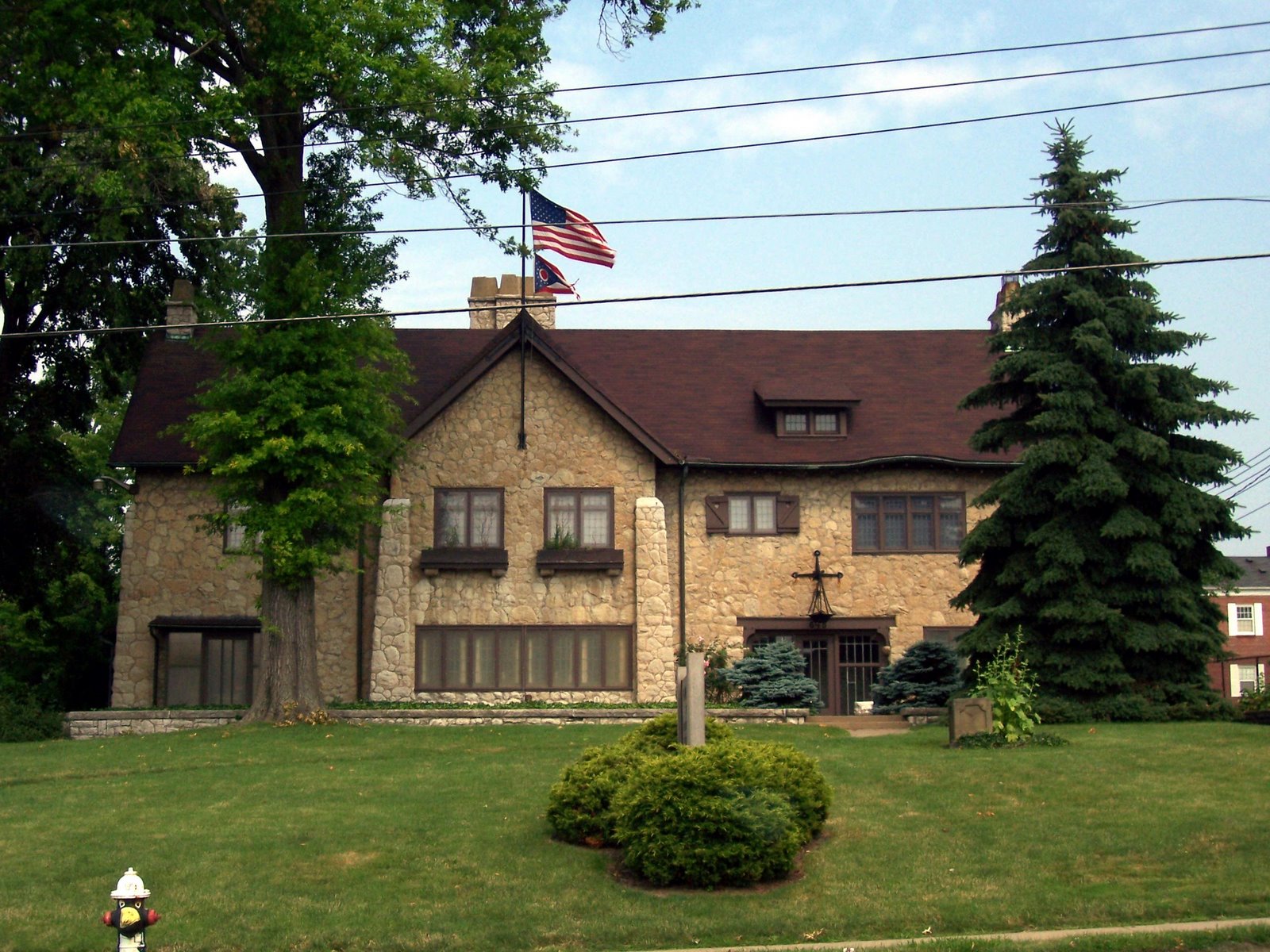
The Historical Society also is unveiling a new logo showing the two historic sites now under their operation. The Arms Family Museum will continue to operate as a historic home and museum, with a new focus on decorative arts and the Arts & Crafts design movement. The new History Center will feature exhibits on the history and heritage of the Mahoning Valley as well as provide new educational and meeting space.

"The History Center will be much more than a museum," says Executive Director Bill Lawson, "this will be a community center based the region's history that can be used to celebrate the life events that create a family's history. We hope that the wonderful ballroom and exhibit spaces become the backdrop for weddings, graduations, reunions, and dances. We want the community to feel at home in our building, and see their story told."


Tuesday, June 22, 2010

2010 Historic Preservation Award Winners

Community Revitilization Award

John Stark Edwards House & Museum – Interior & Exterior Restoration


The John Stark Edwards House was built in 1807, and enlarged in 1809 by one of the first pioneers to arrive from Connecticut. This home was occupied by three families: The John Stark Edwards Family; the Thomas Denny Webb Family; and the Iddings Family. It was a residence until 1938 when the last survivor turned the house over to the state. Martin Davey, Governor of Ohio at the time, gifted the structure to the Trumbull County Historical Society. The house was moved twice and now sits in Warren’s historic district. In 2006 The Historical Society received grant money through the Ohio Cultural Facilities Commission and began a restoration of the interior including ceilings, walls, floors and windows; as well as exterior renovations including a new roof, spouting, repair and repainting of the original cedar siding, new shutters with the original metal hardware, reinforcing of stone walls and accessibility improvements. Project designers include: Harry Kapouralos, project manager; William Sauer, architect; Don Hazel, Trumbull County Historical Society President; Gina Bodor, grant coordinator; and Martha Ellers, advisor.


Community Revitalization Award
National McKinley Birthplace Memorial – Exterior Restoration


The National McKinley Birthplace Memorial, in Niles Ohio, is a tribute to the birth place of our 25th President. Designed by the New York Architectural firm of McKim Mead & White, the memorial was completed in 1915. The facility consists of a central courtyard to house the John Massey-Thind sculpture of President McKinley a public library, and a museum with an auditorium. Restoration included cleaning and repair of terra cotta fascia and soffit within the courtyard, repairing and restoring marble pavers, repair of the original clay tile roof and copper flashing, re-glazing of original windows and replacing three large skylights that had been roofed over for the past 20 years. Owner of this property is the National McKinley Birthplace Memorial Association Board of Trustees and Project designer was Balog Steines Hendricks & Manchester Architects.


Commercial Revitalization Award
Realty Tower Apartments – Exterior & Lobby Restoration


Designed by noted Youngstown architect Morris Scheibel, this 13-story building was built by the Realty Guarantee & Trust Company for their offices in 1924. The building has been listed on the National Register of Historic Places since 1980. The Frangos Group purchased the building in December 2000, and later hired City Architecture, Inc. of Cleveland, Ohio to design an adaptive reuse project to convert the building from offices to apartments. Construction formally began in 2008. Along with renovation of the interior spaces, the project included restoration of the original cornice and other historic exterior finishes, and restoration of plaster, metal, stone and tile surfaces in the historic lobby.


MVHS Directors Award of Achievement
C. Gilbert James, Jr.

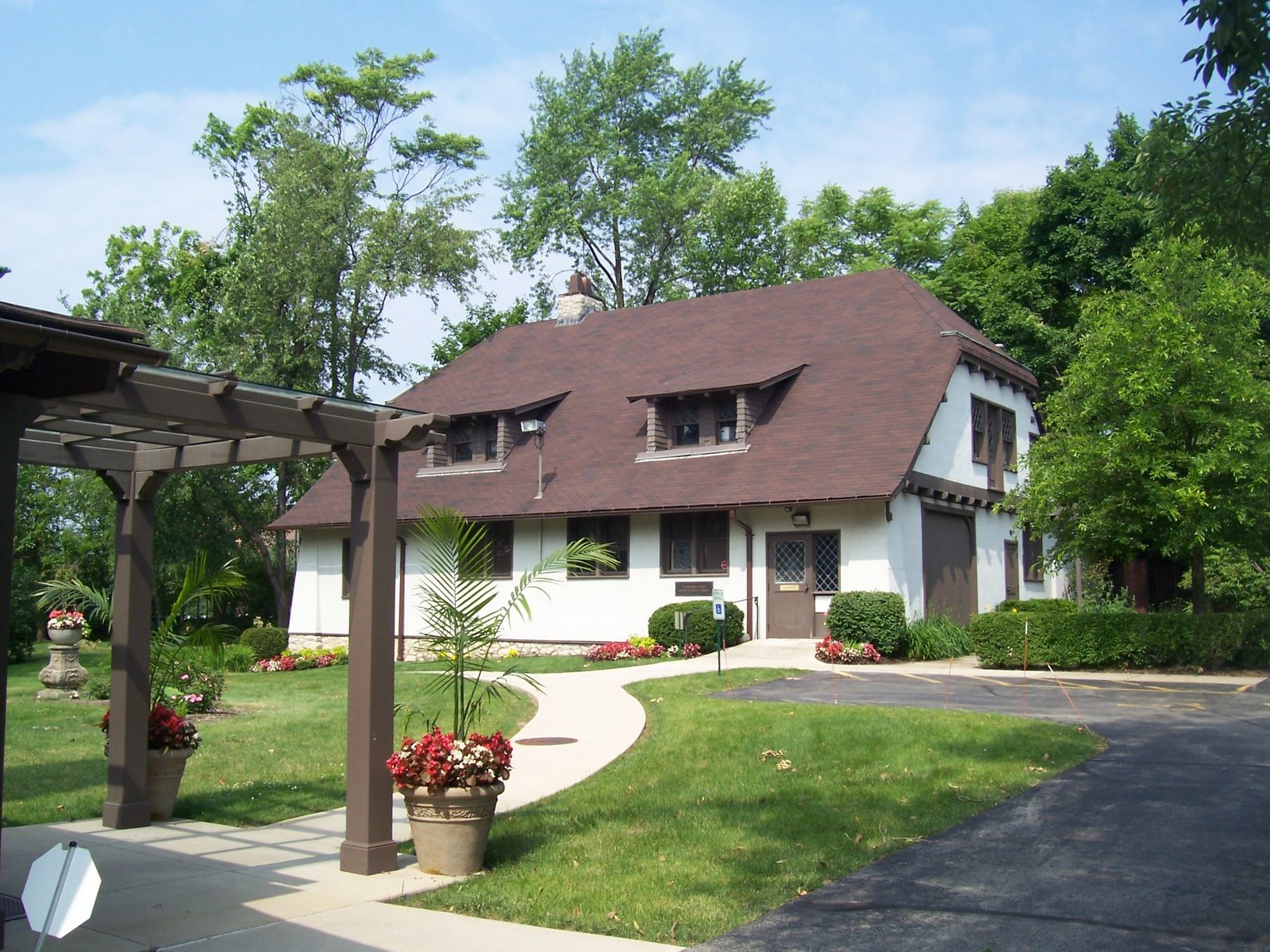
Mr. James has been a strong advocate for local history and historic preservation for five decades including: establishing the Western Reserve Village on the Mahoning County Fairgrounds in Canfield; spearheading the campaign to raise funds to preserve and restore the Mahoning Valley Historical Society’s Carriage House, and adaptively reuse it as the MVHS Archival Library and meeting center; and being an active participant with several historical agencies including MVHS, the Canfield Historical Society, the William Holmes McGuffy Historical Society, the Western Reserve Village Foundation, the International Institute of Youngstown, the former Medical Museum at St. Elizabeth Hospital and the Melnick Medical Museum at Youngstown State University.


MVHS Directors Award of Achievement
Patricia Sweet


A tireless advocate for preservation, Mrs. Sweet led the efforts of the Historic Preservation Committee, Board of Directors and staff to create the annual Mahoning Valley Historical Society Historic Preservation Awards program in 2005. She also was instrumental in securing financial support from the Raymond John Wean Foundation to underwrite this program over all of the past six years. The Historic Preservation Awards program has been a highly successful, visible and positive community outreach for the Historical Society in its goal to advocate for more diverse and effective historic preservation efforts in the region.


MVHS Directors Award of Achievement
Leland Van Camp


Mr. Van Camp has been a cornerstone in the small community of Beloit for many years. In 2004, he provided the impetus to organize the Beloit Area Historical Society; the vision for acquiring and preserving an old tin shop as the home for the organization; and continues to advocate for the collection of artifacts related to Smith Township. Mr. Van Camp operates a gas station, with its restored vintage gas pump, antique candy counter and shelves filled with gas and oil memorabilia, it also can be considered a historic treasure, and spends many hours volunteering for community causes. Nominator David Mannion had this to say about Mr. Van Camp: “His tireless dedication to this community has truly been a blessing, and his keen interest in preserving the history of the Beloit area is very inspiring to the next generation of citizens considering historical preservation efforts and community service.”


See more images of the winning projects!


Wednesday, March 17, 2010

Daniel Sheehy

From History of Youngstown and the Mahoning Valley Vol. 1
By Joseph Green Butler

Daniel Sheehy was born in Tipperary County, Ireland, in 1759. He was given a classical education, having been destined for the law or the priesthood, but early in life left his native land to carve out a fortune in the New World. His decision was hastened by the fact that he was an outspoken enemy of the British government, and, impulsive in temperament, plunged wholeheartedly into the movement for Irish freedom. With two of his near relatives executed for opposing British domination and his own life certain to be forfeited if he remained in Ireland, Sheehy came to America and enlisted in the Revolutionary Army.

Image from Irish in Youngstown and the Greater Mahoning Valley of Jane McLean Sheehy, son Daniel Jr., and wife Charlotte Pearson Sheehy.

Serving until the end of the Revolution, Sheehy located in Connecticut or New York State and met John Young at Albany, New York, in 1796. Sheehy had $2,000 in gold which he wished to invest in land and he accepted John Young's proposal to emigrate to the Western Reserve. He contracted with Young for 1,000 acres of land, a contract that later caused difficulty between Sheehy and Young. Not having a title himself until 1800, Young could not give title at that time to sub-purchasers and Sheehy alleged that in 1799 Young made a second sale of part of Sheehy's land at an advance of 50 cents an acre. To prove his rights Sheehy was forced to make two trips to Connecticut, both of these being made afoot through the wilderness in the dead of winter. An adjustment was finally reached by which Sheehy retained title to 400 acres of land but relinquished his claim to another 600 acres.
For threatening Young's life during this controversy Sheehy was arrested and fined $25, but that their differences were later settled amicably is apparent from the fact that. Sheehy's second son was named after the founder of 'the city. According to one account this was a feminine wile adopted by Sheehy's wife, and really brought about the adjustment of the dispute instead of following it. This pioneer woman was born at Ligonier, Westmoreland County, Pennsylvania, in 1775, a daughter of Robert McLain, an early settler of Central Pennsylvania. Having accompanied Hillman, Young and the others to Beavertown to celebrate the Fourth of July, 1797, Sheehy there met Jane McLain and later he journeyed to Beavertown on horseback for the wedding ceremony. Sheehy died at Youngstown on January 20, 1834, and his widow in 1856, leaving numerous descendants here.

Tuesday, March 16, 2010

The Puddler Poet

Michael McGovern, the “Puddler Poet” was born in Castlerea, Roscommon, Ireland, in 1847 or 1848 at the height of the Famine crisis. Like many refugees, McGovern first immigrated to London, and there he met and married Anne Murphy in 1872. They eventually came to the United States, circa 1881-1882 first to Pennsylvania and then to Youngstown, Ohio where McGovern found work as a puddler in the rolling mills. Puddlers were highly skilled iron workers who labored in heat and smoke and stirred molten iron which was then shaped and rolled into ingots. While McGovern stirred the iron, he also stirred his thoughts and impression, gathering the words to be molded into the poetry for which he is best remembered. As the McGovern family settled into permanent life in the Mahoning Valley, his poems became numerous. McGovern wrote about the mills, the laborers, Ireland, love and the injustices imposed upon the working class. His writings appeared in many newspapers and Irish-American periodicals. His book of poetry, Labor Lyrics, appeared in 1899 and received acclaim through the United States.


Labor’s Cause

We meet today to sympathize
With Homestead men who seek redress;
To soothe with hope the widow’s cries
And aid them in their sore distress;
To join in saying, that as sure
As reigns a supreme judge on high,
Who sees what men who toil endure,
The cause of labor shall not die.

It was not Washington’s intent,
Whose patriot soldiers overthrew
Oppression that these states were meant
As Eldorados for the few.
Their fight is ours again today,
Their wrongs and ours the same imply,
And in those patriots’ names we say
The cause of labor shall not die.

Send forth the words on spirit wings
That wealth no longer shall maintain
In this free land its petty kings,
With armed thugs to guard their reign.
With justice in this noble fight
Wealth’s private armies we defy;
With votes as weapons wielded right,
The cause of labor shall not die.

Wednesday, March 10, 2010

Marie Marsh - Women's Airforce Service Pilots

Members of the WASP (Women's Airforce Service Pilot) are receiving Congressional Gold Medials in Washington D. C. today in honor of their service duirng World War II.


One of those "fly girls" was from Youngstown.

Marie Barrett Marsh


The following is excerpted from Marie Barrett Marsh, A Biography by her husband John E. Marsh.

Marie Barrett Marsh was born December 3, 1919, a daughter of Marie Lawlor and John P. Barrett. When her parents split in 1931, Marie spent a year living with an aunt in Chicago which greatly influenced her young life offering her many cultural and social opportunities. She returned to live with her mother and attended the Rayen School and Youngstown College. While at Rayen she received a $25 award for writing the best senior essay on the history of Ohio.

During the summer of 1940, Youngstown College, in cooperation with Bernard Airport, offered Civilian Pilot Training in which Marie enrolled – one of two girls in the class of 29 students. The course was funded by the U.S. Government and consisted of ground school courses necessary to pass the written exam, plus 35 hours of flying time to pass the flight test in order to obtain a Private Pilot’s License. Following this course, she took Secondary CPT, which included aerobatic instruction in an open cockpit biplane.

After graduating from college in 1941, Marie had a teaching contract in Mecca, Ohio. She taught math, general science, shorthand and typing. After completing a year of teaching at Mecca, she was hired by Dr. George Bowman, Superintendent of Schools in Youngstown, on a teaching contract. She worked in the Superintendent’s office until May of 1943 when she entered flight training at Avenger Field in Sweetwater, Texas.

The WASP Program
Marie graduated in November, 1943, class 43-W-7 as a W.A.S.P. (Women Air force Service Pilot). The WASP women pilots each already had a pilot's license. They were trained to fly "the Army way" by the U.S. Army Air Forces at Avenger Field Airport Sweetwater, Texas. More than 25,000 women applied for WASP service, and less than 1,900 were accepted. After completing four months of military flight training, 1,078 of them earned their wings and became the first women to fly American military aircraft. Except for the fact that the women were not training for combat, their course of instruction was essentially the same as that for aviation cadets.

After training, the WASPs were stationed at 120 air bases across the U.S. assuming numerous flight-related missions, relieving male pilots for combat duty. They flew sixty million miles of operational flights from aircraft factories to ports of embarkation and military training bases, towing targets for live anti-aircraft artillery practice and simulated strafing missions, and transporting cargo. Almost every type of aircraft flown by the USAAF during World War II was also flown at some point by women in these roles. In addition, a few exceptionally qualified women were allowed to test rocket-propelled planes, to pilot jet-propelled planes, and to work with radar-controlled targets. Between September 1942 and December 1944, the WASP delivered 12,650 aircraft of 78 different types. Over fifty percent of the ferrying of combat aircraft within the United States during the war was carried out by WASP pilots.

Marie was assigned to the headquarters of the Weather Wing of the Army Air Force in Asheville, North Carolina. Their duties included being pilots for the non-flying top brass in the Weather Wing, with flights to Army weather stations all over the U.S., courier service to the Pentagon, “mercy flights,” and flight testing the aircraft at the base after repair.

In 1944 Marie resigned from the WASP, as the need for pilots had drastically decreased. She married her high school sweetheart, John Marsh on June 27, 1944 and raised eight children in Vienna. Marie kept her pilot’s license current, and several of her children became involved with aviation. Marie was diagnosed with inoperable lung cancer in 1996 and died in April of 1997.

In 1999, Marie was inducted into the Ohio Women’s Hall of Fame


The WASP Legacy
All records of the WASP were classified and sealed for 35 years, so their contributions to the war effort were little known and inaccessible to historians. In 1975, under the leadership of Col. Bruce Arnold, son of General Hap Arnold, the WASPs fought the "Battle of Congress" in Washington, D.C., to belatedly obtain recognition as veterans of World War II. They organized as a group again and tried to gain public support for their official recognition. Finally, in 1977, the records were unsealed after an Air Force press release erroneously stated the Air Force was training the first women to fly military aircraft for the U.S.

This time, the WASPs lobbied Congress with the important support of Senator Barry Goldwater, who himself had been a World War II ferry pilot in the 27th Ferry Squadron. President Jimmy Carter signed legislation #95-202, Section 401, The G.I. Bill Improvement Act of 1977, granting the WASP corps full military status for their service. In 1984, each WASP was awarded the World War II Victory Medal. Those who served for more than one year were also awarded American Theater RibbonAmerican Campaign Medal for their service during the war.

On July 1, 2009 President of the United Barack Obama and the United States Congressawarded the WASP the Congressional Gold Medal. Three of the roughly 300 surviving WASPs were on hand to witness the event. During the ceremony President Obama said, "The Women Airforce Service Pilots courageously answered their country's call in a time of need while blazing a trail for the brave women who have given and continue to give so much in service to this nation since. Every American should be grateful for their service, and I am honored to sign this bill to finally give them some of the hard-earned recognition they deserve.”

Today, March 10, 2010, 200 surviving WASPs arrived at the US Capitol to accept the Congressional Gold Medal from House Speaker Nancy Pelosi and other Congressional leaders.

Internship Opportunity

The Mahoning Valley Historical Society (MVHS) in Youngstown, Ohio, seeks an intern for Summer Semester 2010 to work with its collection of historical materials at the Arms Family Museum of Local History, located at 648 Wick Avenue near the campus of Youngstown State University. The intern will assist with packing and moving collections objects and rearranging existing storage spaces to accommodate the collections being moved. This will involve lifting, carrying, and moving all sorts of museum objects including portraiture, furniture, costumes and other items housed in archival storage boxes, and more. Some museum objects will be moved off-site to a satellite storage space not far from the museum. Other curatorial duties may be assigned during the course of the internship.

The successful candidate should be willing to learn current standards in curatorial practices. Must possess excellent organizational and communication skills, be willing to work in a cooperative, team-based environment, and be able to lift 30 lbs.

Qualifications: Upperclassman undergraduate or graduate level student in museum studies, public history, history, or related field.

Stipend and Hours: A stipend totaling $1,400.00 will be paid in three (3) installments during the term. The internship totals 150 hours, or approximately 10 hours per week over the course of the summer. Intern hours should be completed during regular MVHS office hours (Monday – Friday, 9:00 a.m. – 5:00 p.m.). Other scheduling arrangements may be made at the discretion of MVHS staff.

Date Available: Monday, May 17, 2010

Application Closing Date: Open until the position is filled.

Contact: Mail resume to:
Summer 2010 Curatorial Internship
c/o Jessica D. Trickett
The Mahoning Valley Historical Society
648 Wick Avenue
Youngstown, OH 44502-1289

Or email with “Summer 2010 Curatorial Internship” as subject to: curator@mahoninghistory.org.

Or call: 330.743.2589